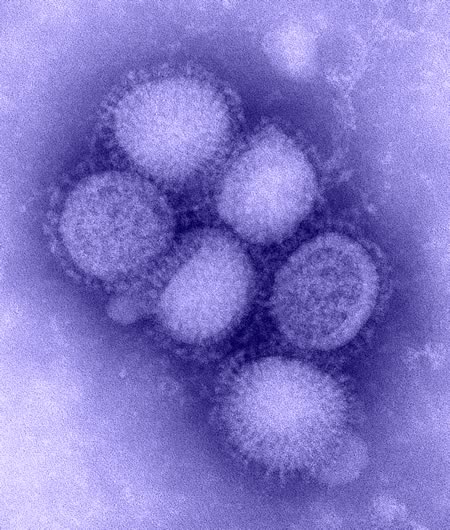
Here’s a vision of how science may work in the future.

Last month I scrambled to write a story about the evolution of swine flu for the New York Times. I talked to some of the top experts on the evolution of viruses who were, at that very moment, analyzing the genetic material in samples of the virus isolated around the world. One scientist, whom I reached at home, said, “Sure, I’ve got a little time. I’m just making some coffee while my computer crunches some swine flu. What’s up?”

Continue reading “Swine Flu Science: First Wiki, Then Publish”

The story of Darwinius masilae continues…

In our previous chapter, we noted that the scientists who described this fossil claimed “no competing interests exist,” ignoring the fact that the fossil was the center of a spectacular media circus that included a heavily financed TV documentary. I contacted Peter Binfield of PLOS One, where the paper was published, and asked for a comment. He said he was contacting the authors and would get back to me.

He has.

Continue reading “Darwinius: Science, Showbiz, and Conflicts of Interest”


Yesterday, I wrote about how snakes use their scales to help them crawl without legs. But what if you don’t have bones–what if you’re just a single cell? I’ve always been fascinated by how cells crawl about, like minuscule versions of The Blob. I recently had an excellent time talking to some of the scientists who are figure out what goes on inside cells when they go from point A to point B. And that’s the subject of my article in today’s New York Times. Be sure to check out the video and graphics that go along with it. It’s alive!

[Image: Wikipedia]

Originally published June 9, 2009. Copyright 2009 Carl Zimmer.

The New York Times, June 8, 2009

Link

It’s easy to imagine the cells in our bodies like bricks in a house, all cemented into place. But we are actually seething with cells that creep, crawl, and squirm. They start wandering soon after conception, and, throughout our lives, our bodies continue to hum with cellular traffic.

Some cells burrow into old bone so that new bone can be laid down in their wake. The tips of new blood vessels snake forward, dragging the cells behind along with them. White blood cells race along on flickering lobes to chase down bacteria before they can make us sick.

Continue reading “New Technologies Allow Scientists to Watch Cells in Motion”