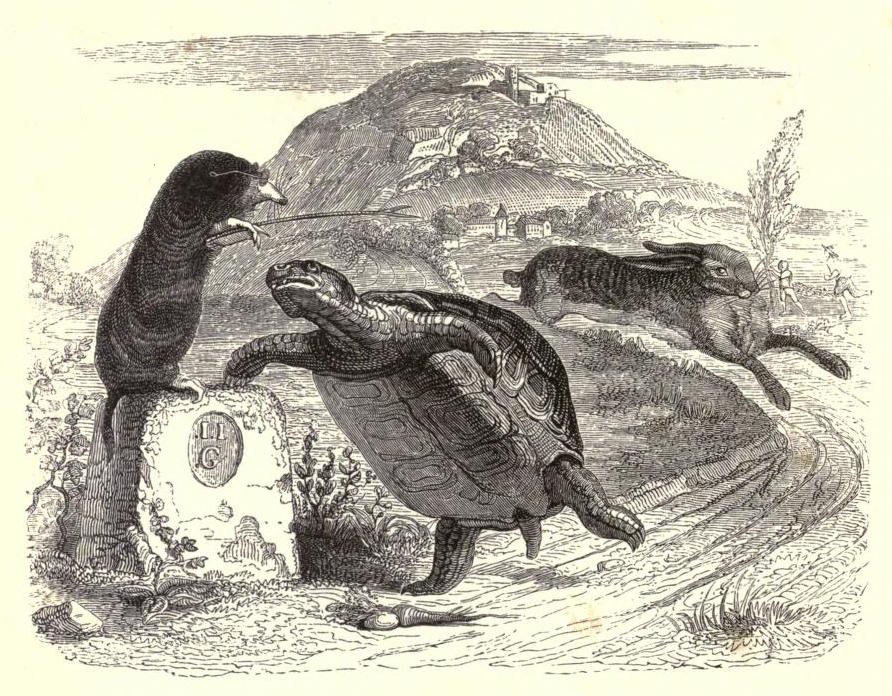
Today I’ve got a story about some new research into evolvability–the potential to reach new adaptations. Scientists have explored the possibility of evolvability for some time now, but mostly through analyzing mathematical equations. Now a new study offers a fine-grained picture of evolvability in action.Richard Lenski of Michigan State and his colleagues have watch evolvability help one line of bacteria beat out another one. It’s a Darwinian story of the tortoise and the hare. Check it out.
(For more on evolvability, check out this review by Massimo Pigliucci [pdf])
[Image: Wikipedia]
Originally published March 21, 2011. Copyright 2011 Carl Zimmer.