
Each time you write a book, your publisher sends over a box of copies. Verging on ten books now, I’m getting overloaded with extras. And so, in the spirit of spring cleaning, I’ve set up a store on Amazon where you can find autographed, good-to-mint-condition copies of my books at reasonable prices. So please check out http://www.amazon.com/shops/carlzimmer

[Update, Monday 4/4 5 pm: Gah! The orders started coming in, and suddenly Amazon stores seem to have gone down. I hope they’ll be back up soon. I’ll update. Update, minutes later: And we’re back.]

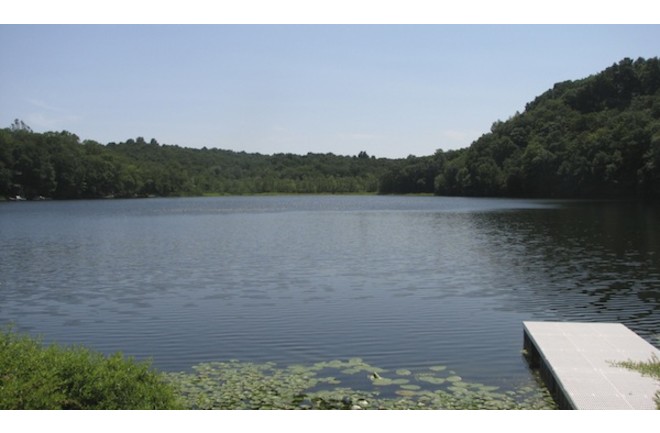
[Image: Photo by Valeshel – Flickr]

Originally published April 4, 2011. Copyright 2011 Carl Zimmer.
The New York Times, April 4, 2011

Link

Over the past 540 million years, life on Earth has passed through five great mass extinctions. In each of those catastrophes, an estimated 75 percent or more of all species disappeared in a few million years or less.

For decades, scientists have warned that humans may be ushering in a sixth mass extinction, and recently a group of scientists at the University of California, Berkeley, tested the hypothesis. They applied new statistical methods to a new generation of fossil databases. As they reported last month in the journal Nature, the current rate of extinctions is far above normal. If endangered species continue to disappear, we will indeed experience a sixth extinction, over just the next few centuries or millennia.

Continue reading “Multitude of Species Face Climate Threat” →

Brian Malow and I talked yesterday about some of my favorite things on the latest episode of Dr. Kiki’s Science Hour–including the evolution odometer. You can watch it on Youtube, or you can head over to Dr. Kiki’s Science Hour site to download the video or audio. (The Skype goes berserk briefly, but we get back on track.)

Originally published April 1, 2011. Copyright 2011 Carl Zimmer.

I went recently to San Francisco to give a talk to a conference of scientists. The scientists were experts in gathering together mountains of biological data — genome sequences, results of experiments and clinical trials — and figuring out how to make them useful: turning them into new diagnostic tests, for example, or a drug for cancer. The invitation was an honor, but a nerve-wracking one. As a journalist, I had no genome scan to offer the audience.

Continue reading “The Human Lake” →