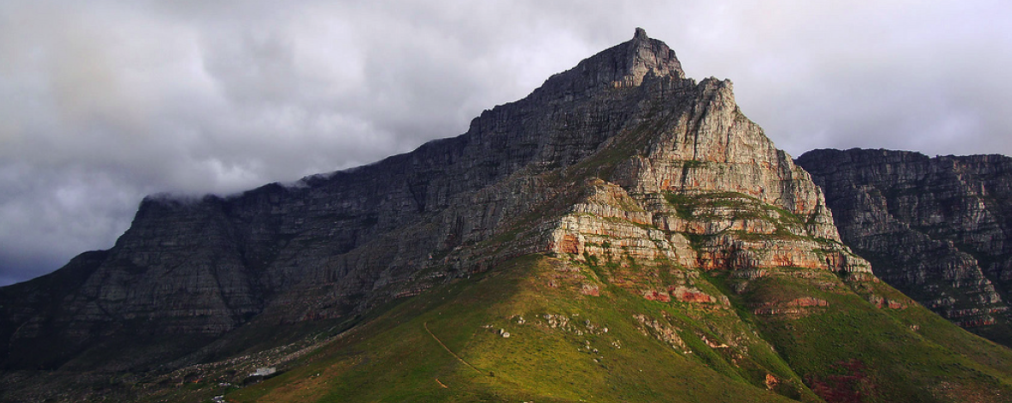
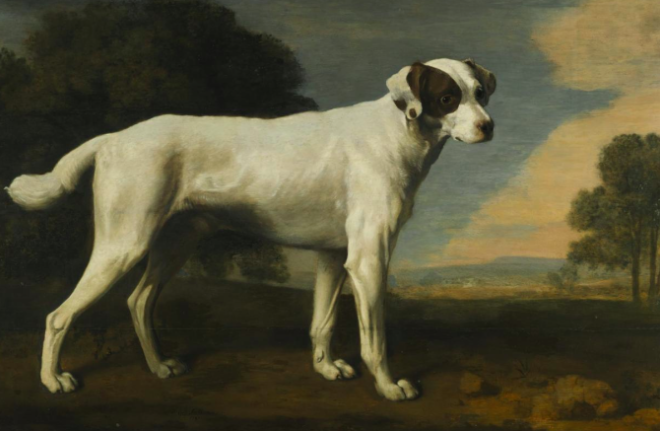
The color of an animal can determine whether it lives or dies. If it’s easily spotted by predators, it may well become a meal. Hidden nicely against its background, an animal can escape its enemies for another day.

The particular colors on an animals are determined partly by the genes its gets from its parents. That means that genes that hide animals can spread thanks to natural selection, leading to the evolution of exquisite camouflage. But that’s not to say that the animal kingdom has settled on a perfect, fixed palette. You can find mismatched individuals. Over the course of generations, a whole population can flicker between mismatched and well-matched.

Continue reading “Evolution in Color: From Peppered Moths to Walking Sticks”

Yesterday I had the pleasure of delivering the Flexner Discovery Lecture at Vanderbilt to a packed room. My talk was entitled, “When Science Goes Wrong and Ways To Fix It.” I talked about some of the struggles the science community is facing with poorly replicated research and misconduct, and how we science journalists can make things worse by seizing on research to make huge claims. The video (complete with slides) is now online. Check it out.

Continue reading “When Science Goes Wrong And Ways to Fix It: Video of My Lecture At Vanderbilt”

A MOUNTAINEER TAKES A WELL-NEEDED BREATH OF OXYGEN FROM HIS MASK NEAR THE TOP OF MOUNT EVEREST. SOURCE: http://ucrtoday.ucr.edu/3827/oh-oxygen

One of the most important things that makes Earth special is the abundant oxygen in its atmosphere. How it got that way is a surprisingly complicated story that’s just coming to light. It’s a story I delve into for this week’s “Matter” column in the New York Times. Check it out.

Continue reading “Breathe in the Mystery: My New York Times Column on Oxygen”

The New York Times, October 3, 2013

Link

To Donald E. Canfield, there’s something astonishing in every breath we take. “People take oxygen for granted because it’s just there and we breathe it all the time,” said Dr. Canfield, a geochemist at the University of Southern Denmark. “But we have the only planet we know of anywhere that has oxygen on it.”

What’s even more astonishing is that the earth started out with an oxygen-free atmosphere. It took billions of years before there was enough of it to keep animals like us alive.

Although scientists have been struggling for decades to reconstruct the rise of oxygen, they’re still making fundamental discoveries.

Continue reading “The Mystery of Earth’s Oxygen”

IS THIS THE LAST THING THAT PARASITE-INFECTED RODENTS SEE? PHOTO BY JULIE FALK VIA CREATIVE COMMONS

Life is rough for parasites. Say you’re a tapeworm that only lives in the gut of one species of shark. You start out as an egg inside an adult tapeworm. Your parent releases you and a bunch of other eggs from its body, and its shark host shoots you out of its own body. Now you float in the vast ocean, stretching out on all sides. You are not made for the free-living world. If you don’t get into another host, you will never reach adulthood. Not just any host, but a fish. And not just any fish, but one species of shark. Chances are good, in other words, that you’ll die.

The miserable odds for individual parasites can potentially drive the evolution of something remarkable: the ability of parasites to manipulate their hosts. By controlling their hosts, the parasites can raise their odds of surviving and reproducing.

Continue reading “The Great Puppet-Master Debate”