SKULL OF DINOGORGON IN SOUTH AFRICA. MANY SUCH MAMMAL-LIKE SPECIES BECAME EXTINCT 252 MILLION YEARS AGO. PHOTO BY JONATHAN BLAIR/NATIONAL GEOGRAPHIC

Around 252 million years ago, as many as 96 percent of all species on Earth became extinct. For my new “Matter” column in the New York Times, I write about the scientists who are trying to solve this great murder mystery, and what their work may tell us about how the planet may respond to our own disruptions. Check it out. Continue reading “The Ultimate Cold Case”

The New York Times, February 20, 2014

Link

Sam Bowring is officially a geologist at M.I.T. Unofficially, he’s a homicide detective trying to solve the ultimate cold case. Dr. Bowring wants to understand how an estimated 96 percent of all species on Earth became extinct at the end of the Permian Period 252 million years ago. It was the biggest of the five mass extinctions recorded in the fossil record. But because this killing happened so long ago, the culprit has evaded discovery for decades.

Dr. Bowring and his colleagues have now gotten an important break in the case. They’ve made the most precise measurement yet of how long it took for all those species to become extinct. 

Continue reading “Seeking a Break in a 252 Million-Year-Old Mass Killing”


On Thursday I participated in an interesting day of talks at the annual meeting of the American Association for the Advancement of Science in Chicago. The theme was “Communicating Science.” I was on a panel in the morning made up of four journalists, who shared our experiences with the changes roiling the field. You can watch it here. I speak from 10:55 to 18:00. After 48:33, the panel and the audience had a long conversation that I thought was pretty interesting.

I thought I’d put my prepared remarks here, with links, in case anyone wanted to chase down the things I was talking about… Continue reading “Scientists On the Loose! My AAAS Talk”

PHOTO BY BRIAN RICHARDSON, FLICKR VIA CREATIVE COMMONS

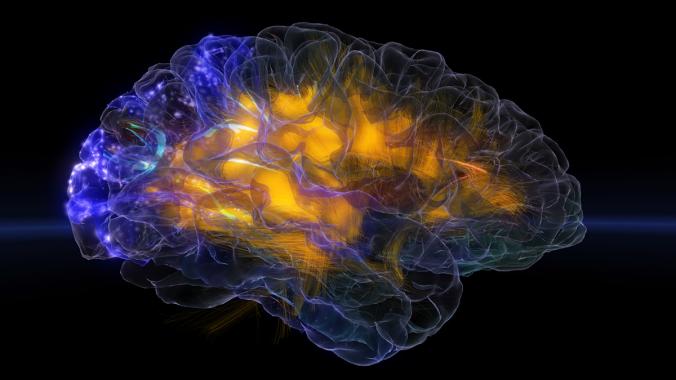
When the brain goes awry, it can reveal to us some clues to how it works in all of us. In my latest “Matter” column for the New York Times, I look at a rare but fascinating disorder that causes people to hallucinate music. How someone could imagine that a piano was playing nearby–or a marching band or church choir–may tell us something about how our brains make sense of the world by making predictions about what comes next. Check it out. Continue reading “The Phantom Piano”

The New York Times, February 13, 2014

Link

In 2011, a 66-year-old retired math teacher walked into a London neurological clinic hoping to get some answers. A few years earlier, she explained to the doctors, she had heard someone playing a piano outside her house. But then she realized there was no piano.

The phantom piano played longer and longer melodies, like passages from Rachmaninov’s Piano Concerto number 2 in C minor, her doctors recount in a recent study in the journal Cortex. By the time the woman — to whom the doctors refer only by her first name, Sylvia — came to the clinic, the music had become her nearly constant companion. Sylvia hoped the doctors could explain to her what was going on.

Continue reading “Phantom Melodies Yield Real Clues to Brain’s Workings”