I’ll be taking the week off from blogging. Let me leave you with an hour-long interview on public radio in Charlotte, NC, which was recorded on Friday when I was in town to give a lecture for the North Carolina State Science Festival. We ranged over a lot of material, from de-extinctions to science literacy to personalized medicine and more. See you next week! Continue reading “From Microbiomes to Neanderthals”
The photographer Rachel Sussman has been traveling the world to take pictures of the oldest living organisms on our planet. She described her journey in this TED talk, and now, at last, she’s created a gorgeous new book, The Oldest Living Things in the World, published by the University of Chicago Press.
Rachel asked if I would write an introduction to the book. After contemplating her photographs and thinking about what these strange Methuselahs mean for us and for science, here’s what I wrote: Continue reading “The Oldest Living Things On Earth”
National Geographic, March 28, 2014
It is easy to feel sorry for the gastrotrich. This invertebrate animal, the size of a poppy seed and the shape of a bowling pin, swarms by the millions in rivers and lakes. After it hatches, it takes only three days to develop a complicated body, complete with a mouth, a gut, sensory organs, and a brain. Having reached maturity in just seventy-two hours, the gastrotrich starts laying eggs. And after a few more days, it becomes enfeebled and dies of old age.
To squeeze a whole life into a week seems like one of nature’s more cruel tricks. But that’s only because we are accustomed to measure our lives in decades.
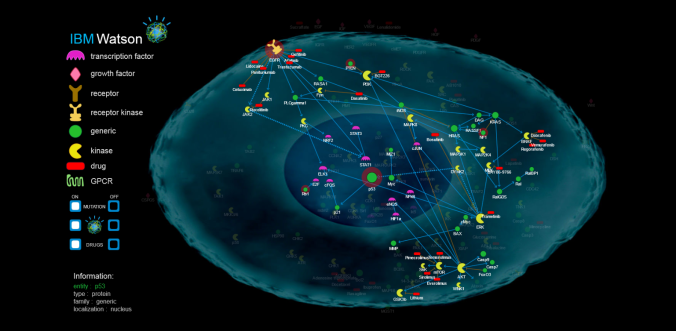
The idea of personalized medicine is very simple. Your doctor peruses your genome to tailor your medical treatment. If you get cancer, she compares the genome of your tumor cells to your ordinary genome.
But in between idea and practice are rough waters yet to be crossed. That’s because the genome doesn’t speak for itself. Instead, we will probably need the help of computers with a human-like power to learn. Continue reading “Personalized Medicine: Taming the Big Data Ocean”
The New York Times, March 27, 2014
When Robert B. Darnell was a graduate student in the early 1980s, he spent a year sequencing a tiny fragment of DNA. Now Dr. Darnell is an oncologist and the president of the New York Genome Center, where the DNA-sequencing machines can decode his grad-school fragment in less than a ten-thousandth of a second.
As an oncologist, Dr. Darnell is firmly convinced that this technological advance will change how cancer is treated. “It’s inspiring for me, and it’s inspiring for lots of doctors,” he said in an interview.
The idea is simple. Oncologists will get a tumor biopsy and have its genome sequenced. They will identify the mutations in the cancer cells, and they will draw up a list of drugs to treat each patient’s particular mix of mutations.
Continue reading “Enlisting a Computer to Battle Cancers, One by One”