Greetings–

There are few things more interesting than ancient human DNA and diseases (if you ask me). So the opportunity to write about both of them in one article was the highlight of my week.

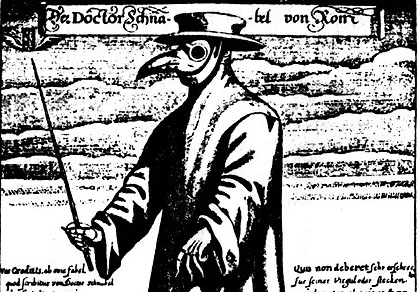
Scientists who have been gathering DNA from Bronze Age skeletons wondered if they might have unknowingly scooped up some DNA from interesting pathogens. Turns out, they did. From 5,000-year-old skeletons, they extracted the DNA of Yersinia pestis, the cause of the plague. The discovery pushes back the plague 3,000 years, and allows us to see the stepwise evolution of the pathogen into its full-blown, flea-carried form. Continue reading “Friday’s Elk, October 23, 2015”
The New York Times, October 22, 2015

Link

Bacteria can change history.

In the 14th century, a microbe called Yersinia pestis caused an epidemic of plague known as the Black Death that killed off a third or more of the population of Europe. The long-term shortage of workers that followed helped bring about the end of feudalism.

Historians and microbiologists alike have searched for decades for the origins of plague. Until now, the first clear evidence of Yersinia pestis infection was the Plague of Justinian in the 6th century, which severely weakened the Byzantine Empire.

Continue reading “In Ancient DNA, Evidence of Plague Much Earlier Than Previously Known”

My apologies–for some reason some of the links in today’s newsletter didn’t work. I’ve fixed them in this version. I promise not to send bad links on future Friday!

Greetings–

A couple weeks ago I stopped by the offices of Business Insider in New York to chat with the editors there, both on camera and off, about all sorts of things biological. They’ve transformed our conversations into a series of short articles and videos that they’ve been sprinkling onto the Internet for the past few days like pinches of chili powder. Continue reading “Friday’s Elk, October 16, 2015: LINKS FIXED, HEAD BOWED IN SHAME”

The New York Times, October 15, 2015

Link

This month, scientists gathered at the National Academy of Sciences in Washington to talk about Crispr, a new method for editing genes. In the past couple of years, the technique has become so powerful and accessible that many experts are calling for limits on its potential uses — especially altering human embryos with changes that could be inherited by future generations.

Among the scientists describing recent advances was one of Crispr’s pioneers, George Church of Harvard Medical School. In the midst of his presentation, packed with the fine details of biochemistry and genetics, Dr. Church dropped a bombshell.

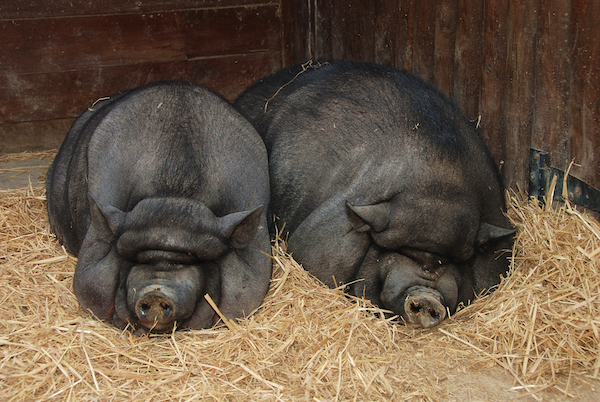
Continue reading “Editing of Pig DNA May Lead to More Organs for People”

Greetings–

This week I was in Baltimore to partake in the annual meeting of the American Society for Human Genetics, partly to find material for my next book on heredity, and partly to look for good stories to report. I envisioned a few peaceful days kicking back in dimly lit rooms, gazing at Manhattan plots. But news waits for no one, and so I ended up on the phone a fair amount of the time to file a couple stories. To wit: Continue reading “Friday’s Elk, October 9, 2015”