Last week I was thrilled to moderate a World Science Festival panel about the mysteries of sleep and dreams. The video is now up here. I’m also embedding it below (if WordPress plays nice with the code…). Be sure to watch till the end, when you can learn about snore-gasms.

I’ve actually written about Niels Rattenborg, one of the panelists before, in a piece for the New York Times. I also wrote about the researchers he’s now collaborating with, who put transmitters on birds that go on ultra-long migrations.

Watch live streaming video from worldsciencefestival  at livestream.com

Originally published June 8, 2011. Copyright 2011 Carl Zimmer.

On Friday, as the E. coli outbreak gained horrific speed in Germany, Newsweek asked me to write about how this epidemic came to be. Scientists still have a lot to figure out about it, but some things are clear–in particular, that the bacteria have great scope for evolution into new deadly strains, thanks in part to the shuttling of viruses between them. (In my book Microcosm, I explain how this is true not just for E. coli, but for much of life.) My piece appears in the new issue of Newsweek, which you can read online here. (One late-breaking piece of news that didn’t make it in, by the way, is the finding yesterday that the new outbreak appears to have come from bean sprouts.)

While I was working on my Newsweek piece, a reporter for the BBC called me up for an article on the good side of E. coli. I explained how much of how we understand about life itself came out of research on this typically harmless bug, and that the biotechnology industry was build upon its biology. That piece came out over the weekend.Check it out.

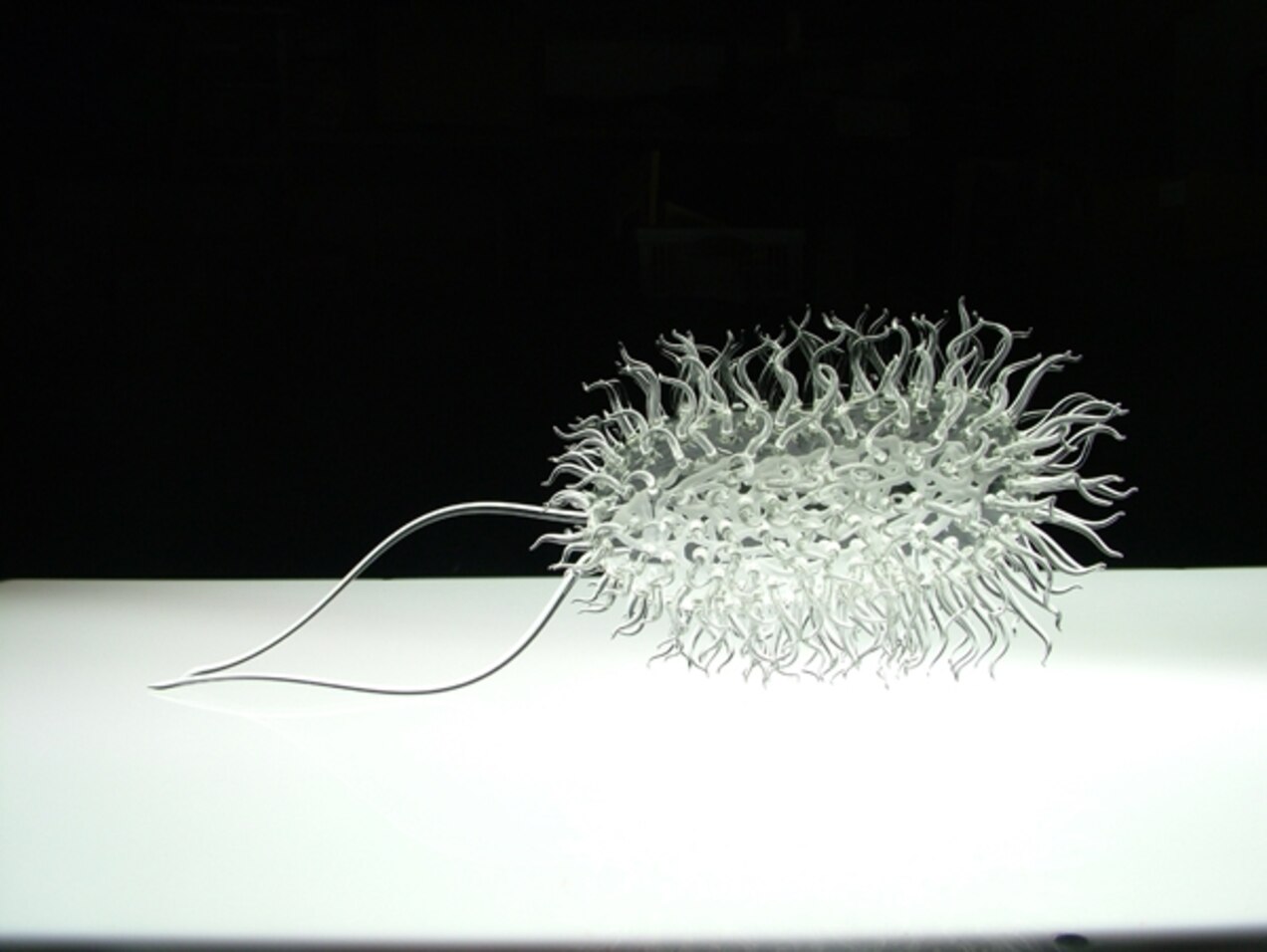
[Image: glass microbe by Luke Jerram]

Originally published June 6, 2011. Copyright 2011 Carl Zimmer.
Newsweek, June 5, 2011

Link

When Philip Tarr heard the first reports of a massive outbreak of E. coli in Europe recently, they had a sickeningly familiar ring. Tarr, a microbiologist at Washington University, is an expert on the strains of E. coli that have periodically wreaked havoc in the United States. In 2006, for example, E. coli on contaminated spinach infected 199 people in the United States, causing kidney failure in a number of cases. The European outbreak seemed to fit the pattern: people were infected with E. coli apparently after eating contaminated vegetables.

Continue reading “E. Coli: Rise of the Superbacteria”

During the whole arsenic life kerfuffle, chemist Steven Benner expressed his skepticism early and often. He wrote one of the eight critiques that Science posted last week, six months after the initial paper.

Last night Benner sent me an email:

Carl:


I have now blogged on this, since the cycle of publication at Science is rather slow.

Steve

To which I can only say: Heh. And, Read it!

Originally published June 3, 2011. Copyright 2011 Carl Zimmer.