Pain is a paradox. It feels like the most real, objective experience we can have, and yet it can be weirdly malleable. It’s better to think of pain, like memory or vision, not as a simple reflection of the world, but as a strategy we’ve evolved to stay alive. Thinking this way can help make sense of the awful experience of chronic pain, when this urgent signal refers to nothing except a brain caught in its own feedback loops. In my latest column for Discover, I take a look at the latest understanding of pain, and some promising research that uses these insights to search for a new, more rational pain-killer. Check it out.

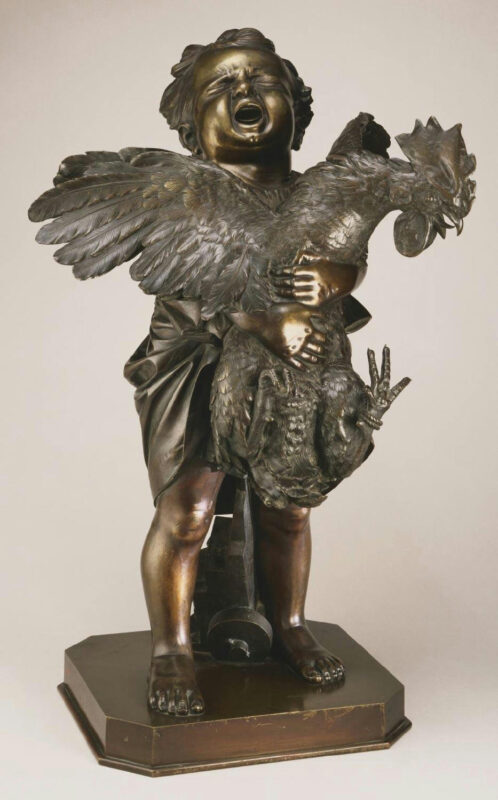
[Image: Boy With A Rooster by Adriano Cecioni, 1868. Photo from Kate Eliot/Flickr via Creative Commons License]

Originally published June 17, 2011. Copyright 2011 Carl Zimmer.

Discover, June 16, 2011

Link

For tens of millions of Americans, pain is not just an occasional nuisance—a stubbed toe, a paper cut—but a constant and torturous companion. Chronic pain can be focused on an arthritic knee or a bad back, diffused throughout the body, or even located virtually in an amputated limb. It can linger for years. And it can transform the world so that merely the light brush of a finger is an agonizing experience. The daily devastation can be so intense that people with chronic pain are up to six times as likely as those who are pain-free to report suicidal thoughts.

Continue reading “A Tiny Key to a Terrible Lock”