This post was originally published in “Download the Universe,” a multi-author blog about science ebooks edited by Carl Zimmer.

Deep Water: As Polar Ice Melts, Scientists Debate How High Our Oceans Will Rise. By Daniel Grossman. Published by TED Books, 2012.

Guest reviewed by John Dupuis

August 15, 2012

Continue reading “Deep Water: A Pretty Good TED Ebook (Really!) About Climate Change”

Slate, August 14, 2012

Link

As a young biologist, Elizabeth Iorns did what all young biologists do: She looked around for something interesting to investigate. Having earned a Ph.D. in cancer biology in 2007, she was intrigued by a paper that appeared the following year in Nature. Biologists at the University of California-Berkeley linked a gene called SATB1 to cancer. They found that it becomes unusually active in cancer cells and that switching it on in ordinary cells made them cancerous. The flipside proved true, too: Shutting down SATB1 in cancer cells returned them to normal. The results raised the exciting possibility that SATB1 could open up a cure for cancer. So Iorns decided to build on the research.

There was just one problem. As her first step, Iorns tried replicate the original study. She couldn’t. Boosting SATB1 didn’t make cells cancerous, and shutting it down didn’t make the cancer cells normal again.

Continue reading “Good Scientist! You Get a Badge.”

Like a number of other science writers, I’ve become increasingly interested (and concerned) about science’s ability to correct itself. (See my recent pieces about arsenic life, de-discovery, and dysfunctional science.) So I was intrigued by a new project launching today to encourage scientists to embrace the spirit of replication. I write about it at Slate. Check it out.

Originally published August 14, 2012. Copyright 2012 Carl Zimmer.

This post was originally published in “Download the Universe,” a multi-author blog about science ebooks edited by Carl Zimmer.

Space Nutrition. By Scott M. Smith, Janis Davis-Street, Lisa Neasbitt, and Sara R. Zwart. Published by NASA Nutritional Biochemistry Laboratory.

Reviewed by Veronique Greenwood

August 14, 2012

Continue reading “Interplanetary Cuisine”

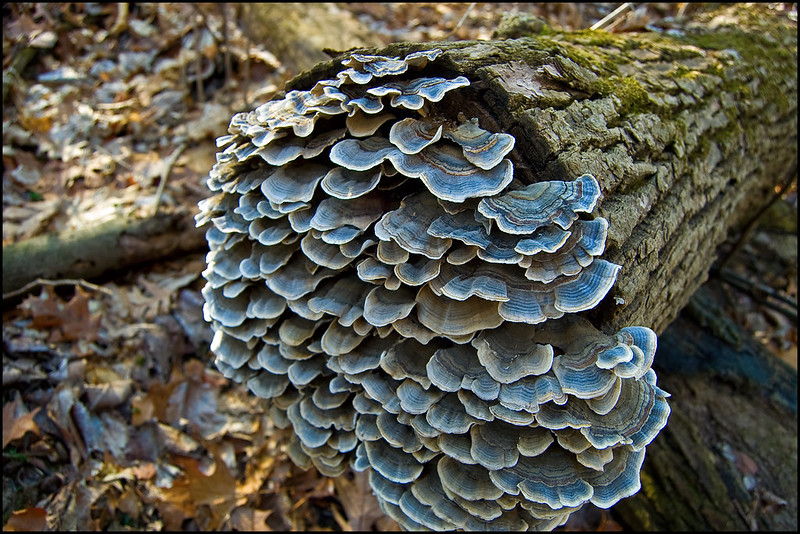
The world, it bears reminding, is far more complicated than what we can see. We take a walk in the woods and stop by a rotting log. It is decorated with mushrooms, and we faintly recall that fungus breaks down trees after they die. That’s true as far as it goes. But the truth goes much further. These days scientists do not have to rely on their eyes alone to observe the fungus on a log. They can drill into the wood, put the sawdust in a plastic bag, go to a lab, and fish the DNA out of the wood. A group of scientists did just this in Sweden recently, sequencing DNA from 38 logs in total. They published their results this week in the journal Molecular Ecology. In a single log, they found up to 398 species of fungi. Only a few species of fungi were living in all 38 logs; many species were limited to just one.

Continue reading “What Lurks In Logs”