This post was originally published in “Download the Universe,” a multi-author blog about science ebooks edited by Carl Zimmer.

What’s Killing Us:  A Practical Guide to Understanding Our Biggest Global Health Problems. By Alanna Shaikh. Published by TED Books, 2012.

Reviewed by Tom Levenson

August 23, 2012

Continue reading “Death and Other Options: How To Think (Hopefully!) About Global Health”
Two years ago, I wrote in the New York Times about scientists exploring evolution to discover the function of our genes. We share a 1.2 billion-year-old common ancestor with fungi, for example, and it turns out that fungi (yeast in particular) have networks of genes remarkably similar to our own.

Back in 2010, the scientists I interviewed told me they hoped to use this method to find new drugs. In today’s New York Times, I write about how they’ve delivered on that promise. It turns out that a drug that doctors have used for over 40 years to kill fungi can slow the growth of tumors. It’s a striking illustration of how evolution provides a map that allows medical research to find their way to promising new treatments. Check it out.

Originally published August 21, 2012. Copyright 2012 Carl Zimmer.

The New York Times, August 21, 2012

Link

People have been searching for new medicines for thousands of years, and yet we have barely explored the universe of possibilities. Recently chemists at the University of Bern in Switzerland tried to estimate how many promising molecules have yet to be tested. In June they published their best guess: over a million billion billion billion billion billion billion. Blindly testing those molecules one at a time is not practical, and most of them will turn out to be useless anyway. So many scientists are looking for strategies they can use to zero in more quickly on promising candidates.

Continue reading “Gene Tests in Yeast Aid Work on Cancer”

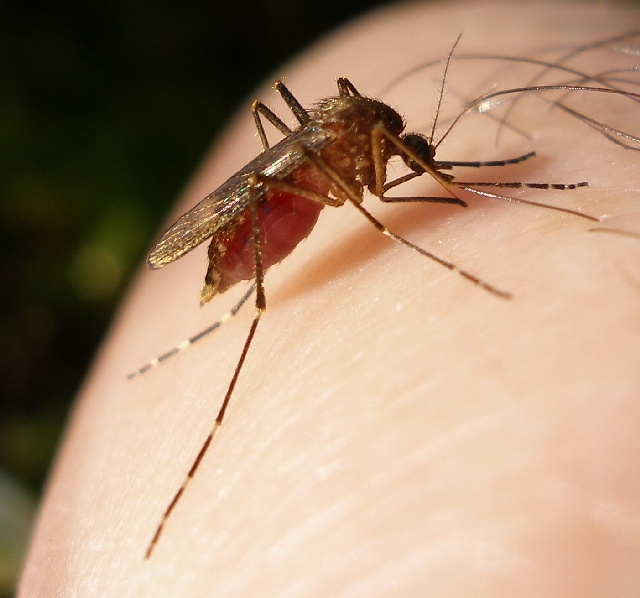
In today’s New York Times, Manny Fernandez and Donald McNeil report that West Nile virus is wreaking havoc in Dallas. This summer, 200 people have become ill in Dallas County, and 10 people have died so far. Those are worryingly high numbers in a single Texas county of 2.4 million people, and so Dallas has declared a state of emergency. The city is now swept up in a debate about the safety of widespread pesticide spraying to kill off mosquitoes, which carry the virus. Fernandez and McNeil quote public health experts who warn that it’s probably a harbinger of things to come throughout the country this year.

For many young people in the United States, West Nile virus has been a fact of life for as long as they can remember. But before 1999, there was no West Nile virus in this country. None. Its arrival and its spread are a sobering lesson in how quickly diseases can establish themselves.

To offer some background to today’s news, I am reprinting an essay from my 2011 book, A Planet of Viruses, about how West Nile came to America. Continue reading “West Nile Virus: The Stranger That Came To Stay”

I have been meaning to read a book coming out soon called Regenesis: How Synthetic Biology Will Reinvent Nature and Ourselves. It’s written by Harvard biologist George Church and science writer Ed Regis. Church is doing stunning work on a number of fronts, from creating synthetic microbes to sequencing human genomes, so I definitely am interested in what he has to say. I don’t know how many other people will be, so I have no idea how well the book will do. But in a tour de force of biochemical publishing, he has created 70 billion copies. Instead of paper and ink, or pdf’s and pixels, he’s used DNA.

Continue reading “Want to Get 70 Billion Copies of Your Book In Print? Print It In DNA”