AT 3 pm ET today on NPR’s Talk of the Nation, I’ll be talking about my article this month in the Atlantic about a rare disease that creates a second skeleton, as well as the quandary of people with rare diseases more broadly. I’ll be on with Jeannie Peeper, who has the condition I write about and who is one of the main subjects in my piece.

Update: Here’s the recording of the segment.

Originally published June 10, 2013. Copyright 2013 Carl Zimmer.
Science is not a string of successes. It has its share of errors and misconduct, and acknowledging them does no disservice to the value of scientific research that stands the test of time. So it was a pleasure to review a new book, Brilliant Blunders, by Marco Livio, for the New York Times Book Review. No one is perfect, Livio shows us, even some of the greatest scientists of the modern age. Check it out.

Originally published June 8, 2013. Copyright 2013 Carl Zimmer.

The New York Times, June 7, 2013

Link

In a letter to a fellow physicist in 1915, Albert Einstein described how a scientist gets things wrong:

“1. The devil leads him by the nose with a false hypothesis. (For this he deserves our pity.)

“2. His arguments are erroneous and sloppy. (For this he deserves a beating.)”

According to his own rules, Einstein should have been pitied and beaten alike. “Einstein himself certainly committed errors of both types,” the astrophysicist Mario Livio writes in his enlightening new book, “Brilliant Blunders.”

Continue reading “The Genius of Getting It Wrong”

The New York Times, June 6, 2013

Link

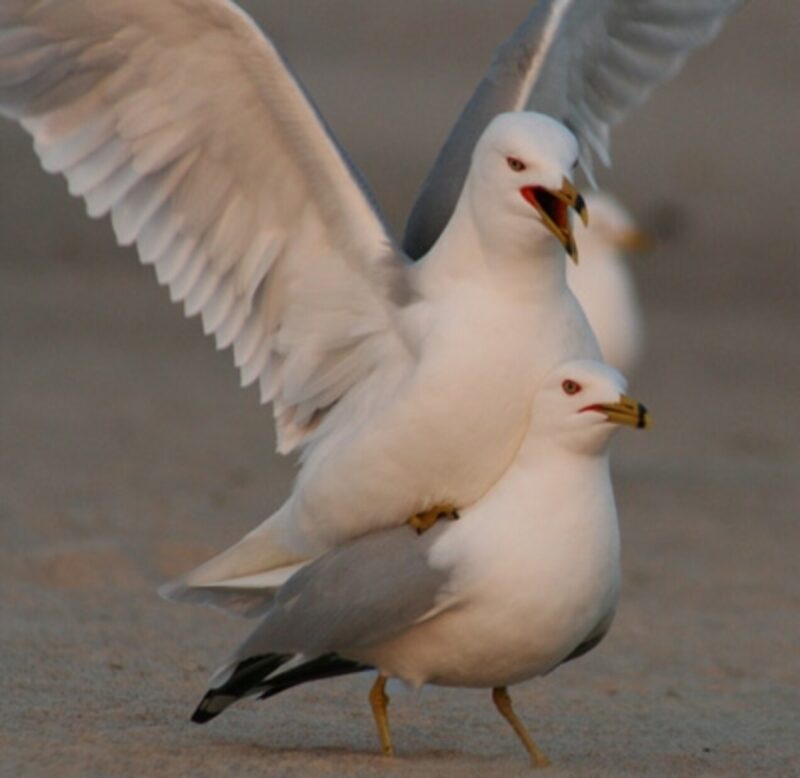
For a strange sexual history, it’s hard to beat birds. In some lineages, bird penises have evolved to spectacular lengths. Ducks, for example, have corkscrew-shaped penises that can grow as long as their entire body. They use their baroque genitalia to deliver sperm to female reproductive tracts that are also corkscrew-shaped — but twisted in the opposite direction.

In other lineages of birds, however, the penis simply vanished. Of the 10,000 species of birds on Earth, 97 percent reproduce without using the organ. “That’s shocking, when you think about it,” says Martin Cohn, a biologist at the University of Florida.

Continue reading “The Sex Life of Birds, and Why It’s Important”

Sex is intriguing in all its forms, and bird sex is particularly intriguing. Some male birds have giant corkscrew-shaped penises, but most have none, thanks to its evolutionary disappearance millions of years ago. For “Matter,” my weekly New York Times column, I take a look at the case of the disappearing penis, and why it’s important to study, despite what some cable news pundits may say.

Check it out!

(And for you anatomy junkies, Ed Yong has more!)

Originally published June 6, 2013. Copyright 2013 Carl Zimmer.