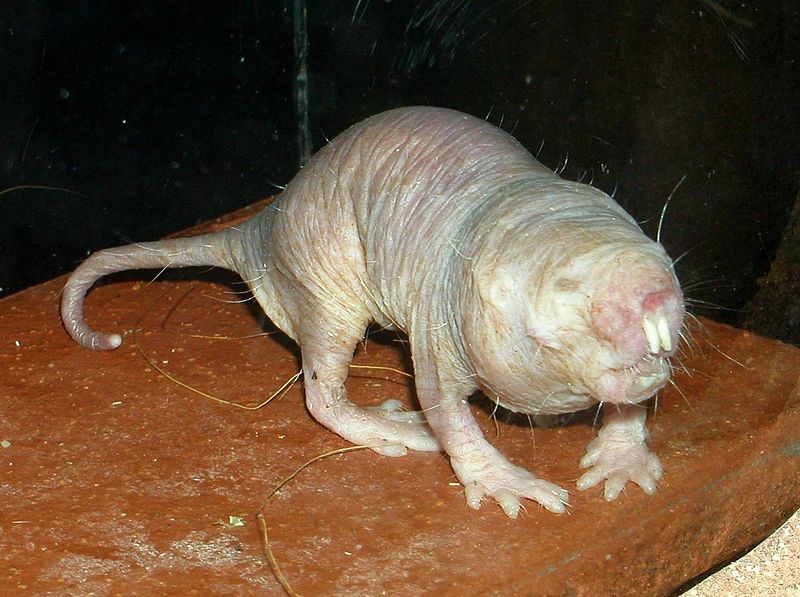
The New York Times, September 26, 2013

Link

In 1987, the government of Thailand launched a huge, unplanned experiment. They built a dam across the Khlong Saeng river, creating a 60-square-mile reservoir. As the Chiew Larn reservoir rose, it drowned the river valley, transforming 150 forested hilltops into islands, each with its own isolated menagerie of wildlife.

Conservation biologists have long known that fragmenting wilderness can put species at risk of extinction. But it’s been hard to gauge how long it takes for those species to disappear. Chiew Larn has given biologists the opportunity to measure the speed of mammal extinctions. “It’s a rare thing to come by in ecological studies,” said Luke Gibson, a biologist at the National University of Singapore.

Continue reading “In Fragmented Forests, Rapid Mammal Extinctions” →

Back in April, I wrote in National Geographic about the provocative idea of bringing extinct species back to life. In the five months that have passed since then, I haven’t spotted any mammoths or saber-tooth lions drifting through my front yard. If “de-extinction” ever does become real, it won’t for quite a while.

What I have seen over the past five months is a new conversation. Part of the conversation has revolved around the specifics of de-extinction. Some people are open to the possibilities of rebuilding genomes and embryos of vanished species. Some people find it a flashy distraction from the real work of fighting the current wave of extinctions.

Continue reading “Genetically Engineering the Wild” →

RIYADH AT NIGHT. PHOTO BY PETER BAKER, VIA CREATIVE COMMONS

We have the dubious privilege of observing a new disease in the midst of being born. The disease could go on to spread around the world, stall out as a minor, local blight, or disappear altogether. Scientists have been observing its emergence for a year now, and while they know more than they did in 2012, they still can’t predict quite what will happen. Part of their uncertainty stems from the fact that they still don’t know much about its past.

Continue reading “MERS At One: The Deadly Virus Drizzle” →

A couple weeks ago I wrote about the great work at Retro Report in looking back at news stories that were in the headlines decades ago. It was especially gratifying to see all the science they’ve delved into. This morning, they unveiled another fascinating look at the history of science. It’s on the drug thalidomide, which caused dramatic birth defects to children’s arms and legs in the 1950s and led to the modern regulation of medicine.”The Shadow of Thalidomide” features interviews  with the victims of the drug and scientists who discovered new medical uses for it. 

Continue reading “Retro Report Looks At the Afterlife of Thalidomide” →

MYLLOKUNMINGIA, A 520-MILLION-YEAR-OLD VERTEBRATE. COPYRIGHT QUADE PAUL, FROM ERWIN & VALENTINE’S THE CAMBRIAN EXPLOSION

Just over half a billion years ago, the animal kingdom went through a remarkable flowering that lasted somewhere in the neighborhood of 20 million years. During the so-called Cambrian Explosion, the first known fossils of many major groups of living animals appear. It’s a chapter of evolutionary history that has captivated many scientists ever since Darwin. And in recent years researchers have gathered a lot of fresh evidence about different factors that might have been the trigger to this evolutionary big boom. Today in the New York Times, I talk to Paul Martin, the director of the Oxford Museum of Natural History, who has co-authored a new synthesis of ideas about the Cambrian Explosion. Rather than looking for just one cause–such as rising sea levels–he argues for a tangled web of feedback loops. Check it out.

Continue reading “Rising Seas, Burrowing Worms, and Nasty Jaws: Weaving Together Animal Evolution” →