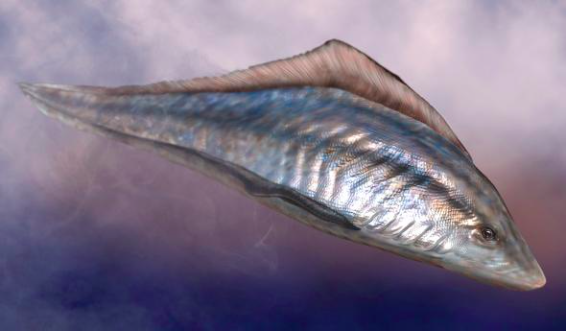
MYLLOKUNMINGIA, A 520-MILLION-YEAR-OLD VERTEBRATE. COPYRIGHT QUADE PAUL, FROM ERWIN & VALENTINE’S THE CAMBRIAN EXPLOSION

Just over half a billion years ago, the animal kingdom went through a remarkable flowering that lasted somewhere in the neighborhood of 20 million years. During the so-called Cambrian Explosion, the first known fossils of many major groups of living animals appear. It’s a chapter of evolutionary history that has captivated many scientists ever since Darwin. And in recent years researchers have gathered a lot of fresh evidence about different factors that might have been the trigger to this evolutionary big boom. Today in the New York Times, I talk to Paul Martin, the director of the Oxford Museum of Natural History, who has co-authored a new synthesis of ideas about the Cambrian Explosion. Rather than looking for just one cause–such as rising sea levels–he argues for a tangled web of feedback loops. Check it out.

Continue reading “Rising Seas, Burrowing Worms, and Nasty Jaws: Weaving Together Animal Evolution”

The New York Times, September 19, 2013

Link

The name Myllokunmingia may not ring a bell, but it is worth knowing. This 520-million-year-old creature was the size of a guppy, with a tiny swordfish-like fin running high over its back. The fossils it has left behind preserve traces of a skull.

Humans have a skull, too. This and a number of other traits we share with Myllokunmingia reveal it to be one of the oldest, most primitive vertebrates yet found. It is, in other words, a hint of where we came from.

Myllokunmingia emerged during one of the most important phases in the history of life, an evolutionary boom known as the Cambrian explosion (named for the geological period when it took place).

Continue reading “New Approach to Explaining Evolution’s Big Bang”

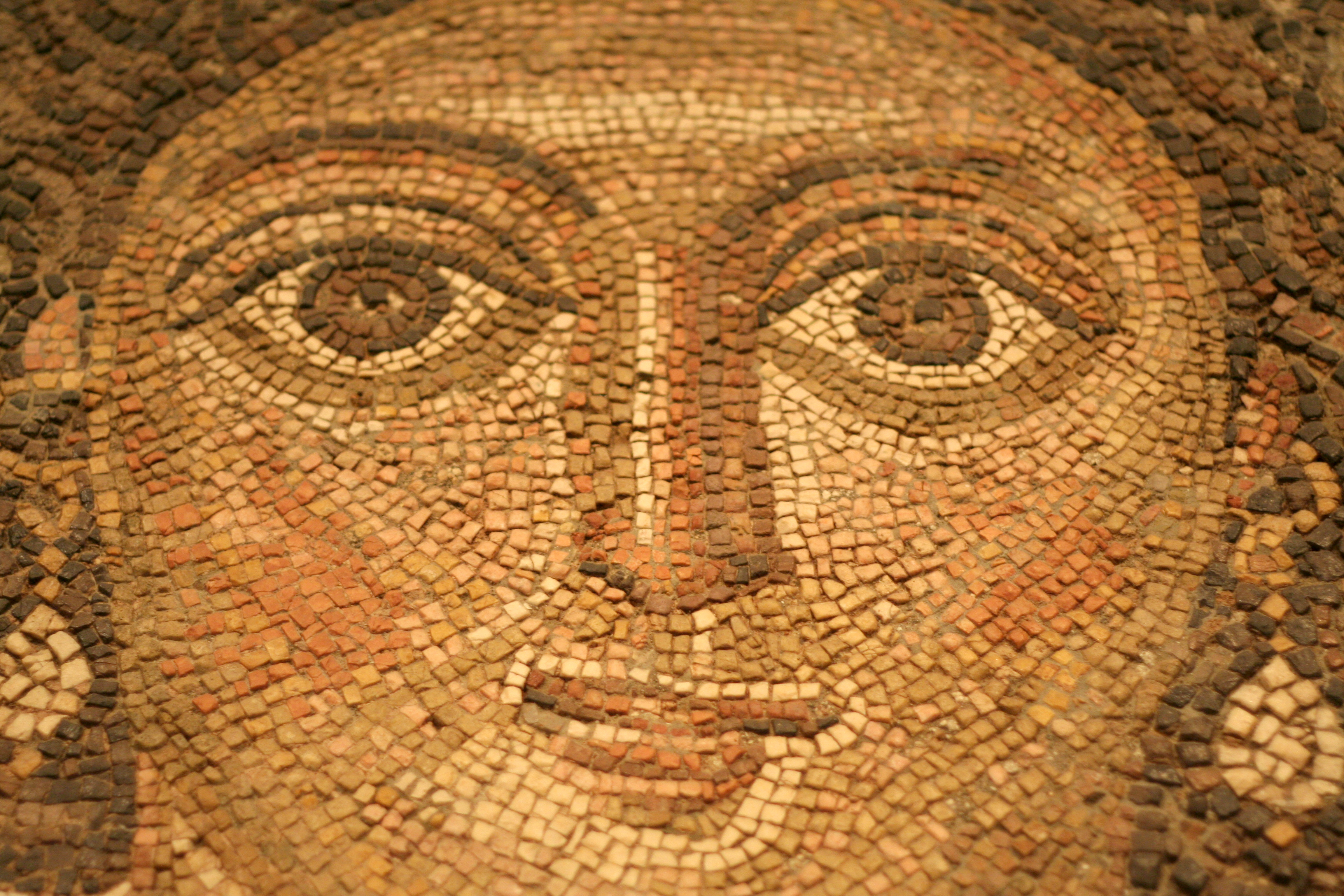
PHOTO BY MILTON CORREA VIA CREATIVE COMMONS

In a mosaic portrait, many tiles, each a little different from the other, add up to an entire person. Genetically speaking, we can be living mosaics, too. As our cells divide, they sometimes mutate, creating distinct populations within us. Many of us carry the genomes of other people inside our bodies.

Scientists have known about these phenomena for a long time, but it was hard to know whether they were more than odd flukes. Now that scientists can sequence genomes from individual cells, they can now start to get at an answer. They are more widespread than was previously thought. The growing significance of chimeras and mosaicist has implications for our sense of genetic identity, as well as for treating diseases. Our many personal genomes are the subject of a feature I’ve written for today’s New York Times. Check it out.

Continue reading “Chimeras and Mosaics: My New York Times Feature on Our Personal Genome*s*”

The New York Times, September 16, 2013

Link

From biology class to “C.S.I.,” we are told again and again that our genome is at the heart of our identity. Read the sequences in the chromosomes of a single cell, and learn everything about a person’s genetic information — or, as 23andme, a prominent genetic testing company, says on its Web site, “The more you know about your DNA, the more you know about yourself.”

But scientists are discovering that — to a surprising degree — we contain genetic multitudes. Not long ago, researchers had thought it was rare for the cells in a single healthy person to differ genetically in a significant way.

Continue reading “DNA Double Take”

At the end of August, I got a press release saying that a chemist named Steven Benner was going to deliver a lecture in Italy in which he broached the idea that we might descend from Martians.

I met Benner ten years ago. He was sitting in a coffee shop in Cambridge, Massachusetts, working out what it would take to make life from scratch. Helping him in this exercise was Jack Szostak, a Nobel-prize winning Harvard biochemist whom he had known for years. In the midst of their conversation, Dr. Benner abruptly turned to me and asked, “How much do you think it would cost to create a self-replicating organism capable of Darwinian evolution?”

As a journalist, I’m not accustomed to such questions.”Twenty million dollars?” I blurted.

“Ridiculous,” I thought to myself. But Benner just tilted his head, looked away, and nodded in thought.

“That’s what Jack says,”he said.

Benner, a distinguished fellow at the Westheimer Institute at the Foundation for Applied Molecular Evolution in Florida, has balanced his career between two ways of doing science. On the one hand, he is a data-driven chemist who publishes papers with heart-stopping titles like, Labeled nucleoside triphosphates with reversibly terminating aminoalkoxyl groups. On the other hand, he is the sort of scientist who enjoys trying to draw up Frankenstein’s budget, or investigating whether life could exist in the liquid methane oceans of Saturn’s moon Titan.

So I knew that he’d have something interesting to say in his talk about Mars.

Not surprisingly, many reports have gone for the Little-Green-Men angle. But when I caught up with Benner, we ended up talking not about alien life, but about the philosophy of science–about how to investigate the origin of life when it happened so long ago and we still have so much left to learn about it. That conversation is the subject of my new “”Matter”” column for the New York Times. Check it out.