PHOTO BY LEO REYNOLDS. VIA CREATIVE COMMONS

If you have ever struggled through a math class, you may not think of numbers as natural. They may seem more like a tool that you have learn how to use, like Excel or a nail gun. And it’s certainly true that numbers pop in the archaeological record just a few thousand years ago, with the abruptness you’d expect from an invention. People then improved the number system after that, with the addition of zero and other upgrades.

But scientists have found that we are actually born with a deep instinct for numbers. And a new study suggests that our number sense operates much faster than previously thought. It might be better called our number reflex.

Continue reading “We Are Instant Number Crunchers”

The New York Times, March 2, 2015

Link

Thirty-four years ago, doctors in Los Angeles discovered that some of their patients were succumbing to a normally harmless fungus. It soon became clear that they belonged to a growing number of people whose immune systems were hobbled by a virus, eventually known as human immunodeficiency virus, or H.I.V.

To date, an estimated 78 million people have become infected, 39 million of whom have died.

As the true scale of the virus’s devastation began to emerge, a number of scientists set out to investigate its origins. Piece by piece, year after year, the scientists reconstructed its history. Their research slowly revealed that the virus did not make a single leap from animals, but several.

Continue reading “Two Strains of H.I.V. Cut Vastly Different Paths”

The New York Times, February 27, 2015

Link

The turquoise killifish lives in a fleeting world: the ponds that appear only during the rainy season in East Africa.

As a new pond forms, turquoise killifish eggs buried in the mud spring from suspended animation. The eggs hatch, and in just 40 days the fish grow to full size, about 2.5 inches. They feed, mate and lay eggs. By the time the ponds dry up, the fish are all dead.

Even when hobbyists pamper them in aquariums, turquoise killifish survive only a few months, making them among the shortest-lived vertebrates on Earth. So the turquoise killifish may not seem the best animal to study to discover the secrets of a long life.

Continue reading “In Short-Lived Fish, Secrets to Aging”

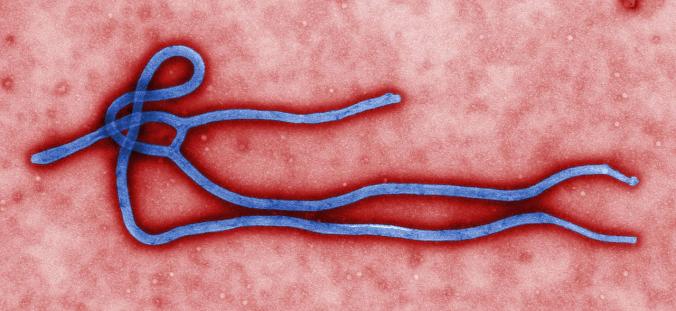
EBOLA VIRUS. MICROGRAPH FROM CDC/CYNTHIA GOLDSMITH

Back in September, when the West African Ebola outbreak was getting worse with every passing week, a lot of people began to worry that the virus could spread by air. And even if it couldn’t spread by air yet, they worried that it might be on the verge of mutating into an airborne form.

When I talked to virus experts, they saw little ground for either concern. The epidemiology of the outbreak, like previous ones, had the sort of pattern you’d expect from a virus that spreads mainly through contact with body fluids. A look at the evolutionary history of viruses indicates that a fluid-adapted virus would be unlikely to switch to going airborne with just a couple mutations. (I wrote in the New York Times about these conversations here and here.)

Continue reading “Is It Worth Imagining Airborne Ebola?”