If not for a virus, none of us would ever be born.

In 2000, a team of Boston scientists discovered a peculiar gene in the human genome. It encoded a protein made only by cells in the placenta. They called it syncytin.

The cells that made syncytin were located only where the placenta made contact with the uterus. They fuse together to create a single cellular layer, called the syncytiotrophoblast, which is essential to a fetus for drawing nutrients from its mother. The scientists discovered that in order to fuse together, the cells must first make syncytin.

What made syncytin peculiar was that it was not a human gene. It bore all the hallmarks of a gene from a virus.
Continue reading “Mammals Made By Viruses”

I’ve posted a batch of autographed, hardback editions of A Planet of Viruses in my Amazon store. You can have your own inscribed copy for ten dollars plus shipping. Click here to order.

For those unfamiliar with the book: it’s a linked collection of twelve essays on twelve viruses. I use each one to illustrate a broad lesson about viruses in general, such as the fact that they are the most abundant life form on Earth and that they make up a sizable portion of the human genome.

The Washington Post wrote: “In A Planet of Viruses, science writer Carl Zimmer accomplishes in a mere 100 pages what other authors struggle to do in 500: He reshapes our understanding of the hidden realities at the core of everyday existence.”

PS: The paperback edition will be coming out this spring.

Originally published February 12, 2012. Copyright 2012 Carl Zimmer.

I’ve got a story on the cover of the latest issue of Time. It’s about the evolutionary origins of friendship. For a number of scientists, friendship–in a deep sense of the word–is not limited to our own species. The fact that friendship may be a widespread biological phenomenon could help us better understand why it has such a positive effect on our own health.

If you’re interested in the scientific literature, the best way in–and the way I first started to get familiar with it–is this review in the latest issue of Annual Review of Psychology by Dorothy Cheney and Robert Seyfarth, two of the world’s leading primatologists.

Continue reading “Animal Friendships: My cover story for Time magazine”

WPR has posted the podcast of my talk last week on the Ben Merens show on their site–including a lot of interesting comments from callers.(Direct link to MP3)

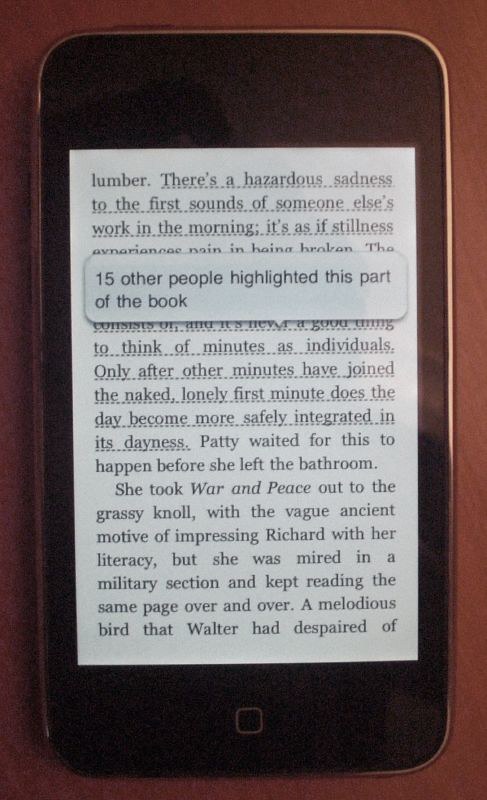
[Image: Jonathan Franzen’s Freedom on an Iphone. Gasp! Prepare for the Apocalypse! Photo by badosa on Flickr/Creative Commons]

Originally published February 9, 2012. Copyright 2012 Carl Zimmer.

Next week is Social Media Week, during which time the American Museum of Natural History is hosting an exploration of science and social media. It will take place on Thursday, 2/16, at 6 pm, and after the official panel discussion there will be a beer and wine reception in the Museum’s Hall of Minerals and Gems.

The panelists for the evening include– Continue reading “Thursday, February 16: Science and social media panel in New York”