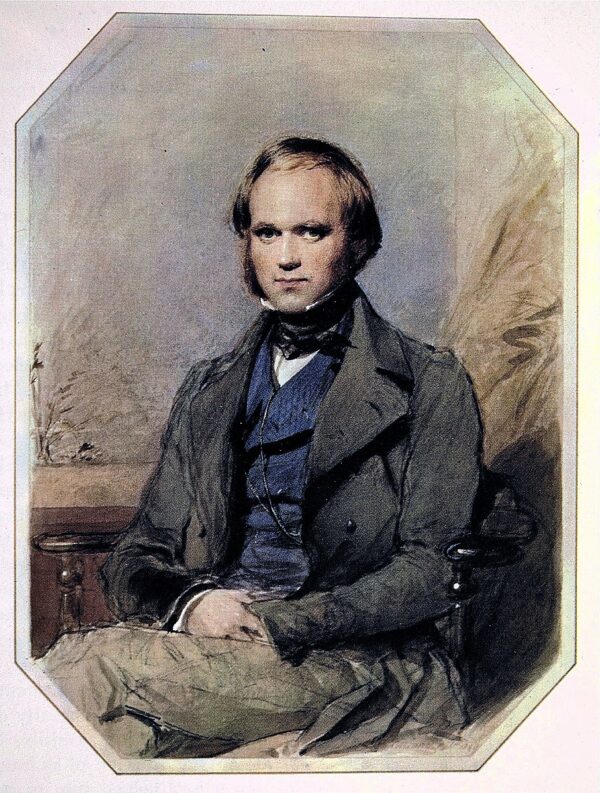
In tomorrow’s New York Times, I write about what pigeons taught Darwin about evolution, and what they can teach us over 150 years later. The spur for the story is a new paper in which scientists analyze the genomes of forty different pigeon breeds to understand the molecular secrets behind their remarkable diversity. My story is accompanied by some wonderful photos as well as a podcast in which I talk to my editor, David Corcoran, about the research.

Continue reading “How Pigeons Cured My Case of YAGS”

We’re made of parts. Our skull is distinct from our spine. Our liver does not grade subtly into our intestines. Of course, the parts have to be connected for us to work as a whole: a skull completely separated from a spine is not much good to anyone. But those connections between the parts are relatively few. Our liver is linked to the intestines, but only by a few ducts. That’s a far cry from the intimate bonds between all the cells that make up the liver itself, not to mention the membrane that wraps around it like an astronaut’s suit. The distinctness of the parts of our bodies is reflected in what they do. In the liver, all sorts of biochemical reactions take place that occur nowhere else. Our skull protects our brain and chews our food–jobs carried out by no other part of our body.

Biologists like to call these parts modules, and they call the “partness” of our bodies modularity. It turns out that we are deeply modular. Our brain, for example, is made up of 86 billion neurons linked together by perhaps 100 trillion connections. But they’re not linked randomly. A neuron is typically part of a dense network of neighboring neurons. Some of the neurons in this module extend links to other modules, creating bigger modules. The brain can link its modules together in different networks to carry out different kinds of thought.

Continue reading “The Parts of Life”

Charles Darwin was a DIY biologist. He was not a professor at a university; he was not a researcher at a government lab. As a young gentleman, he had the right connections to tag along on the voyage of HMS Beagle as an unofficial, unpaid naturalist. Once he came home, he spent most of his time at his country estate, where he ran decades of experiments on orchids and rabbits. He played a bassoon to earthworms to see if they sense low noises. He made painstaking observations on other species. He spent years peering through his personal microscope at barnacles. He spent afternoon following ants around his lawn. To add to his personal discoveries, he wrote to a global network of friends and acquaintances for every scrap of information he could find that seemed relevant to his theory. While Darwin took advantage of every tool a Victorian naturalist of means could get his hands on, they were quite simple compared to the equipment evolutionary biologists use today. No DNA sequencers or satellite databases for him.

Continue reading “Creating Young Darwins”