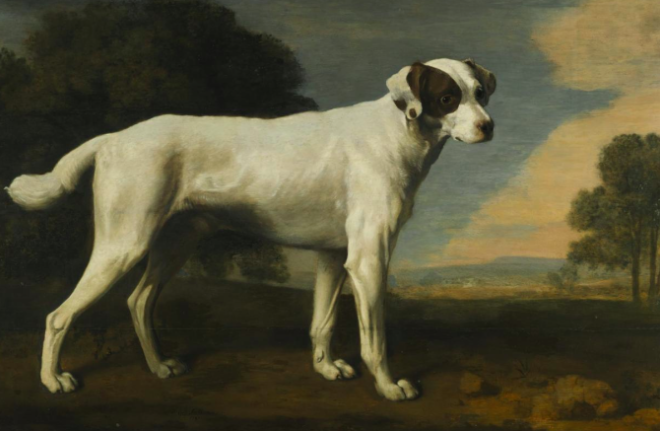
VISCOUNT GORMANSTON’S WHITE DOG. BY GEORGE STUBBS

I suspect I will be writing about the science of dogs as long as I’m writing about science at all. These creatures, despite being so familiar, have so much left to reveal. For my new “Matter” column at The New York Times, I look at the latest research on the origin of dogs, based on new analysis of DNA from ancient dog (or wolf?) fossils. For now, there’s a battle over where dogs first called home. Check it out.

Continue reading “Where Dogs Are From: My New Column for the New York Times”

It’s not exactly true to say that each of us has our own genome. We have genomes. Some of us, known as chimeras, have genomes from more than one person. The cells of children linger behind in their mothers; in the womb, cells from twins can intermingle. The rest of us non-chimeras can trace our genomes to one origin–the fertilized egg from which we developed. But as the cells in our bodies divided, they sometimes mutated, creating a panoply of genetic variation known as mosaicism.

Continue reading “Our Speckled Brains”


Snakes inhabit our fears and stories. Why do they have such a hold on us? For my New York Times column this week, I take a look at a provocative theory that snakes have shaped our evolution since our primate ancestors first clambered through the trees. This week, a new study added a neurological twist to this idea, as scientists offered evidence that some of our neurons may be exquisitely sensitive to snakes. Check it out.

Continue reading “Snakes on the Brain: My New Column for the New York Times”