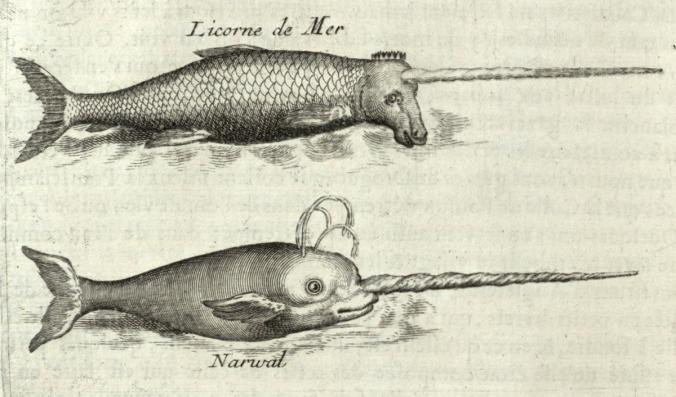
ONE OF THESE IS REAL. FROM PIERRE POMET’S HISTOIRE GENERALE DES DROGUES, TRAITANT DES PLANTES, DES ANIMAUX, & DES MINERAUX… (PARIS, 1694). VIA NEW YORK ACADEMY OF MEDICINE

In 1577, the English explorer Martin Frobisher led an expedition of 150 men to the northern reaches of Canada, in search of a passage to India and a fortune in gold. As they surveyed the islands near the coast, they came across something Frobisher could never have anticipated: a unicorn fish.

“Upon another small island here,” Frobisher wrote in his journal, “was also found a great dead fish, which, as it would seem, had been embayed with ice, and was in proportion round like to a porpoise, being about twelve foot long, and in bigness answerable, having a horn of two yards long growing out of the snout or nostrils. This horn is wreathed and straight, like in fashion to a taper made of wax, and may truly thought to be the sea-unicorn.”

When Frobisher returned to England, he presented the horn to Queen Elizabeth, who commanded that it be kept with the crown jewels. Continue reading “The Mystery of the Sea Unicorn”
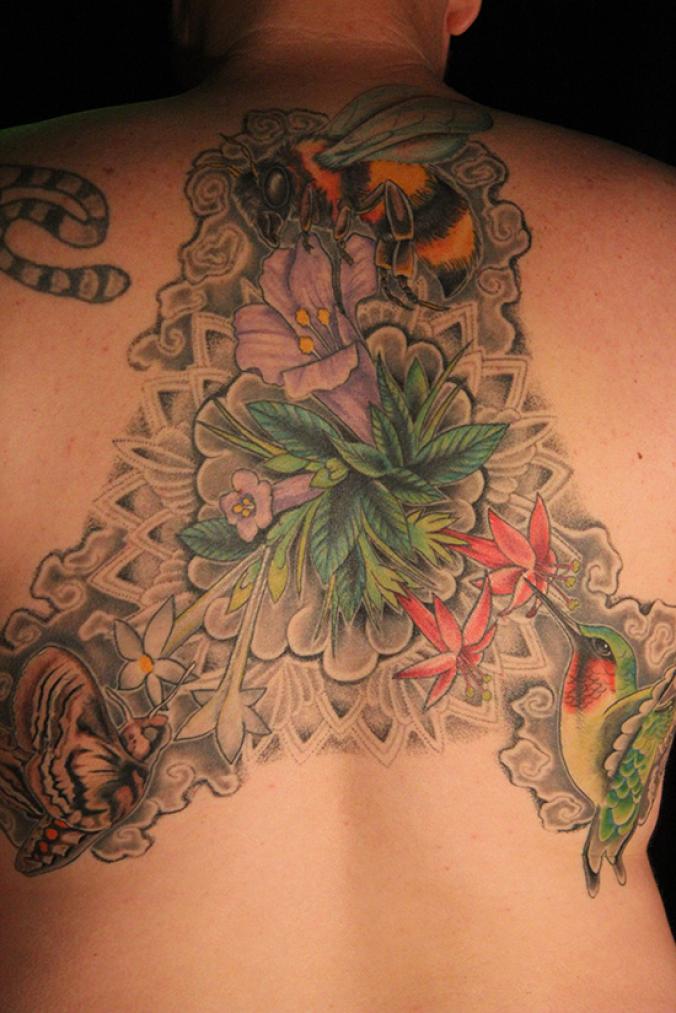
 

Tattoo by Dave Kotinsley, Gainesville, FL

Jacob Landis writes, “I’m a graduate student at the University of Florida studying flower evolutionary development with a focus on plant/pollinator interactions. My ink represents the concept that I have been working on for almost 6 years now. This piece shows three species in the Phlox family. The red and white flowers are both part of the genus Ipomopsis and the blue/purple flower is in the closely related Polemonium. The pollinator of each flower is shown interacting with the flower. These interactions represent the concept of pollinator syndromes: certain features of the flower will attract certain pollinators. The long red tubular flowers attract hummingbirds, the white tubular flowers attract hawk moths, and the more open blue/purple flowers often attract bees.”

You can see the rest of the Science Tattoo Emporium here or in my book, Science Ink: Tattoos of the Science Obsessed(The paperback edition comes out in May; you can pre-order here.) Continue reading “The Birds And the Bees and the Pollinator Syndrome [Science Ink Sunday]”

Life changes its surroundings. Beavers build dams that alter the course of rivers. Forests can feed thunderstorms with their moisture. And those changes can, in turn, create new habitats that allow for the evolution of new kinds of life. For my new “Matter” column in the New York Times, I discuss a hypothesis about a truly global act of bio-engineering that may have happened 700 million years ago. Sponges may have transformed the oceans, flushing them with oxygen. And thanks to that change, more complex animals were able to evolve. We may have sponges to thank for being here, in other words. You can read the whole thing here. Continue reading “Sponges: Planetary Engineers?”


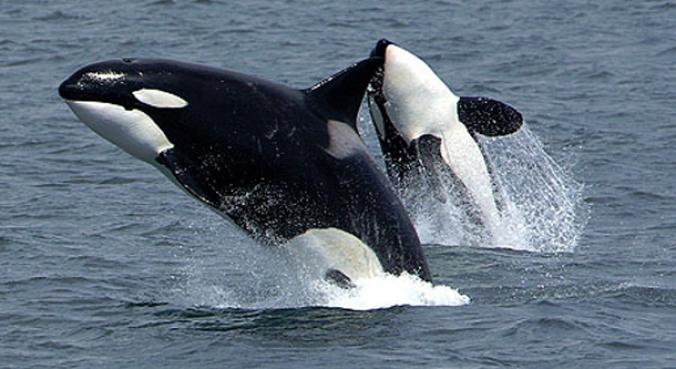
Killer whales. Wikipedia/Robert Pitman en.wikipedia.org/wiki/File:Killerwhales_jumping.jpg

The challenge–and the pleasure–that evolutionary biologists face in their work is deciphering the history of nature, no matter how weird it gets. And nature doesn’t get much weirder than a beluga whale singing through its nose to see the ocean. Continue reading “Seeing the Ocean With A Buzzing Nose”

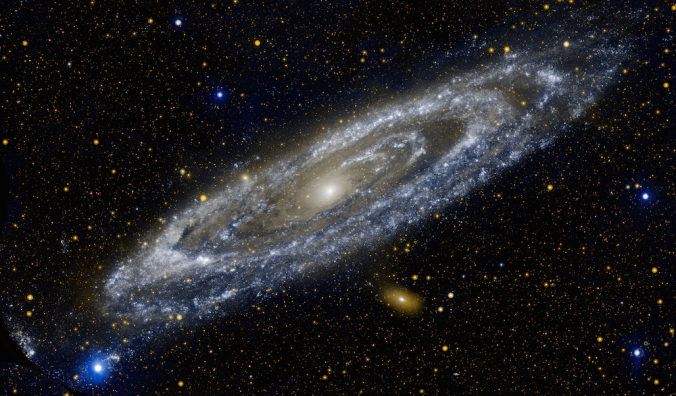
ANDROMEDA GALAXY. NASA

Fifteen months ago, Virginia Hughes, Brian Switek, Ed Yong, and I joined National Geographic to form Phenomena. I’m delighted that our circle is now expanding. Starting today, science writer Nadia Drake will be writing “No Place Like Home.” I’ve followed Nadia’s work for the past couple years, but I’ve never had the chance to talk to her. To celebrate her debut, I asked her some questions about her past and future. Continue reading “Please Welcome Nadia Drake, the Newest Member of Phenomena”