
I’ve been quiet on the blog front for the past week thanks to some cross-country traveling for work and a few deadlines I must wrap up before turning to a new kind of experience–the pedagogical sort.
Category: Blog
I’ve been quiet on the blog front for the past week thanks to some cross-country traveling for work and a few deadlines I must wrap up before turning to a new kind of experience–the pedagogical sort.
A while back my web site was hacked and my archive of stories vanished. After switching servers, I left the site frozen in time while I dealt with more pressing matters. I’ve finally gotten a little stretch of free time to refresh my memory of Dreamweaver, and now the site is back up to date. Along with the archive, you can also find an updated list of past and future talks. I’m starting to make plans for talks about The Tangled Bank and the 15th anniversary of The Origin of Species this fall, and appearances are now just starting to fall into place. I expect more talks to pop up in the weeks to come, and I will be much more diligent in getting the information online quickly.
Originally published July 29, 2009. Copyright 2009 Carl Zimmer.
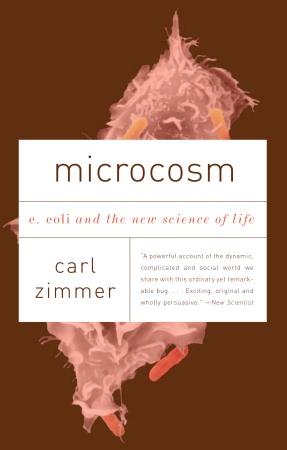
Nature offers suggestions for summer reading in the latest issue, andMicrocosm is on the list. Don’t worry–just because the book is about E. coli doesn’t mean they’ll have to close the beach:
Continue reading “Bacteria on the Beach: Microcosm on Nature’s Summer Reading List”
The New York Academy of Science has set up a nice site documenting their Two Cultures meeting in May. On their video page, you can see the panel on the media where I spoke. Despite appearances, I am not the younger brother of Andy Revkin and Ira Flatow. And be sure to check the two videos from Dean Kamen, describing his robot competition for kids.
Originally published July 29, 2009. Copyright 2009 Carl Zimmer.
When I first learned about the fungus Cordyceps, I refused to believe.
I was working on a book about the glories of parasites, so I was already in the parasitic tank, you could say. But when I read about how Cordyceps infects its insect hosts, I thought, this simply cannot be. The spores penetrate an insect’s exoskeleton and then work their way into its body, where fungus then starts to grow. Meanwhile, the insect wanders up a plant and clamps down, whereupon Cordyceps grows a long stalk that sprouts of the dead host’s body. It can then shower down spores on unfortunate insects below.
I mean, really.