Last March a new kind of flu came on the scene–the 2009 H1N1 flu, a k a swine flu. Hatched from an eldritch mingling of viruses infecting humans, birds, and pigs, it swept across the world. Here in the United States, the CDC estimates that between 41 and 84 million people came down with swine flu between April and January. Of those infected, between 8,330 and 17,160 are estimated to have died. For more details on the evolution of this new flu strain, here’s a video ofa lecture I gave in November.
Category: Blog
The warming climate may earn carbon dioxide all the headlines (including ones about senators who can’t tell the difference between a couple blizzards and a 130-year climate record), but the gas is having another effect that’s less familiar but no less devastating. Some of the carbon dioxide we pump into the air gets sucked into the ocean, where it lowers the pH of seawater. We’ve already dropped the pH of the ocean measurably, and as we burn more fossil fuels we will drop it more. Ocean acidification has the potential to wreak world-wide havoc on marine life.
Today in Yale Environment 360, I write about scientists comparing today’s ocean acidification to the last time something comparable happened–55 million years ago. Short answer: today’s is big. Really, really big. Check it out.
Originally published February 15, 2010. Copyright 2010 Carl Zimmer.
Charlie writes, “I am a scientist at the University of Minnesota. In 1999, as an undergrad on a plant science internship, a friend and I were sitting on our dorm roof, wondering what the best nerdy science tattoo would be. The double helix down the leg or back was suggested, but we concluded that a chloroplast was a better fit for our scientific interests. As the photon-collecting organelle in plants, it’s the source of energy for nearly all plant life and a fascinating biochemical machine. At that point in our careers, we found something that would represent our fascination with plants, no matter what field we chose to pursue. He is in botanical education (and didn’t go through with the tattoo), I’m in horticulture.”
Click here to go to the full Science Tattoo Emporium.
Originally published February 14, 2010. Copyright 2010 Carl Zimmer.
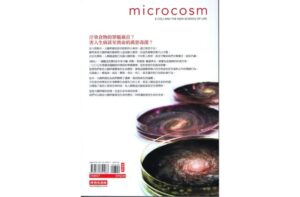
A couple foreign editions of Microcosm have arrived. They got me thinking about book design across the globe. The Chinese edition takes my world-within-a-microbe metaphor to cosmic extremes.
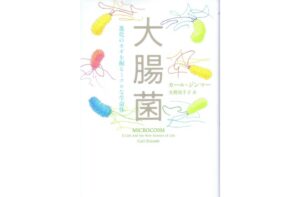
All of my Japanese editions have covers that are both cute and relevant. Their edition of Microcosm is no exception. Who thought E. coli could have the delicacy of a crane?

The Front:
And one more for the back:
Originally published February 12, 2010. Copyright 2010 Carl Zimmer.
This optical illusion is so cool, you’ll swear you’ve just damaged your brain. From Michael Bach’s peerless collection.
Originally published February 11, 2010. Copyright 2010 Carl Zimmer.