Here’s a paraphrasing of an email I got this morning from Harvard biologist Naomi Pierce:

“I don’t know if you remember, but I mentioned a few years ago how Vladimir Nabokov, best known as a novelist, was also a self-taught expert on butterflies. In 1945 he had a wild idea about how his favorite group of butterflies evolved that no one took seriously. Well, for the past decade I and my colleagues have been scouring the Andes for butterflies and sequencing their DNA to test his hypothesis. And he turns out to have been right in all sorts of ways.

“Oh, and the paper will be published tonight.”

I got on the phone fast. And here’s my story on Nabokov’s last laugh in the New York Times.

[Update: here’s the new paper that vindicates Nabokov, and here’s his 1945 monograph [click on the pdf link for a free file!]. Check out his Nabokovian conclusion at p.44, plus his painstaking drawings of butterfly sex organs.]

Originally published January 25, 2011. Copyright 2011 Carl Zimmer.
Why is ScienceOnline a meeting like no other? Because it’s the sort of meeting where a biologist named Rob Dunn can set up shop in the lobby to ask for samples of bellybutton shmutz that he can analyze for biological diversity. Not only is it a place where such a person will not be hustled out by security, but it’s a place where a whole bunch of people respond by grabbing Q-tips to do their part for science. And you can bet every last bit of your bellybutton lint that I was right up near the front of the line.

Ten days later, my sample is now thriving nicely on a Petri dish, awaiting a more detailed analysis of its DNA. And here are the rest of the samples from the meeting.

All I can say is, #974, what is going on in there?

Originally published January 25, 2011. Copyright 2011 Carl Zimmer.

I’ve got two stories in the New York Times tomorrow, at two ends of life’s scales.

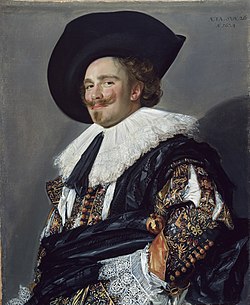
In the cover story, I write about smiles. Faces have long fascinated me (see this Discover column on Darwin and Botox), and so I was intrigued to come across this recent paper focusing on smiles in particular. I talked to David Corcoran about the story for the first twelve minutes of the latest Science Times podcast.

Continue reading “Mysterious smiles and single-cell dogs: a double-header in tomorrow’s New York Times”