Story Collider is a monthly performance where people tell stories about science. (Think The Moth in a lab coat.) The organizer, Ben Lillie, invited me to tell a personal story about the place of science writing in my life. I decided to talk about a memorable night in South Sudan, when I wondered what I was living for.

I told the story to a great crowd at Union Hall in Brooklyn last week. And you can hear the podcast at the Story Collider web site. Check it out.

Originally published October 4, 2011. Copyright 2011 Carl Zimmer.
My editor at the New York Times called me a few weeks ago and said, “Slime molds! Can you write something about them?” Moments like that fill me with gratitude.

Here’s my story, on the cover of tomorrow’s Science Times. I look at how they solve the evolutionary puzzles of altruism, build highway systems, and turn out to be some of the oldest life forms on land.

(And for more on the ever-expanding worldwide diversity of slime mold, check out the Eumycetezoan Project.]

[Image: myriorama/Flickr via Creative Commons]

Originally published October 3, 2011. Copyright 2011 Carl Zimmer.

Yesterday I wrote about the arsenic life saga, prompted by a long retrospective feature by Tom Clynes in Popular Science. While I recommend the piece, I expressed reservations because it passed along the “scientists besieged by bloggers” spin on the events, when the actual history doesn’t support that.

Clynes (whom I’ve never met) emailed me in the evening with this comments, which he allowed me to share:

Continue reading “Tom Clynes on arsenic life”

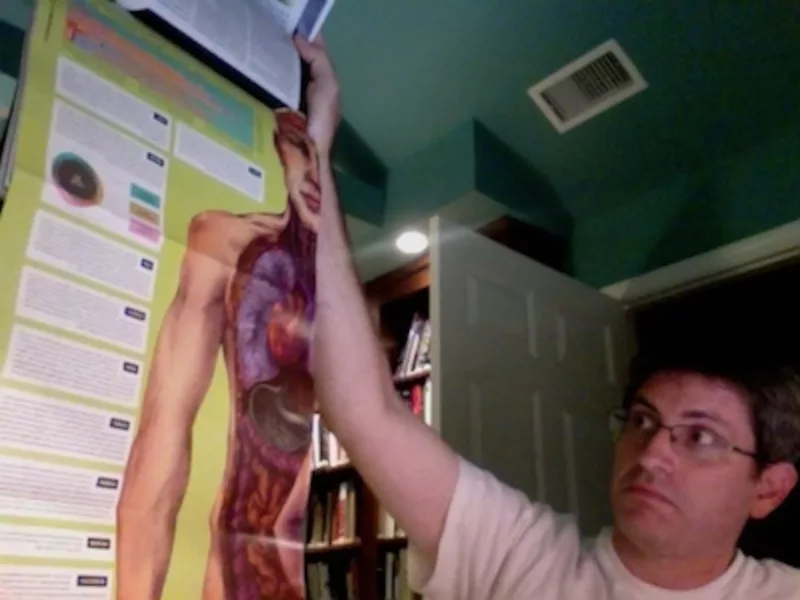
The folks at Wired recently asked me to put together a guide to the human ecosystem. You can get it in the October issue as a centerfold–the kind of centerfold that shows someone who took off the clothes, and then took off the skin. Bugs in your eyes, in your ears, in your gut, influencing your mind and health–they’re all there. Check it out.

Originally published September 30, 2011. Copyright 2011 Carl Zimmer.

If you haven’t been tracking the arsenic life saga closely over the past ten months, check out Tom Clynes’s big feature at Popular Science. It focuses on the travails of Felisa Wolfe-Simon, the lead author on the paper, who has gone from the Olympian heights of TED talks to getting “evicted” from the lab where she’s worked for the past couple years. (Her word.)

For those of us who’ve been tracking the story for a while, that last fact popped out. Wolfe-Simon had been working in the lab of her co-author Ronald Oremland, but that’s now over. Let’s recall that her senior colleagues dubbed the intriguing microbe she studied GFAJ-1, for “Get Felicia A Job.”

Continue reading “#ArsenicLife Goes Longform, And History Gets Squished”