In tomorrow’s New York Times, I’ve got a long story about a growing sense among scientists that science itself is getting dysfunctional. For them, the clearest sign of this dysfunction is the growing rate of retractions of scientific papers, either due to errors or due to misconduct. But retractions represent just the most obvious symptom of deep institutional problems with how science is done these days–how projects get funded, how scientists find jobs, and how they keep labs up and running.

Along with the main story, I also wrote a sidebar about how hard it is to hear from the scientists who write retracted papers. I also spoke on the latest Timescast video, which I’ve embedded below. I show up with Arturo Casadevall at about 4:30. There are also lots of links in my story to the original papers. And if you don’t already read it, be sure to check out the blog Retraction Watch, which has been digging deep into the retraction story for years now.

Originally published April 16, 2012. Copyright 2012 Carl Zimmer.
Over at Download the Universe, we’ve posted a bunch of new reviews of science ebooks. We fell in love with some titles, we hated others, and we had a love-hate relationship with ebooks that were great in some ways and awful in others. When we started Download the Universe, we thought we were coming together to start something pretty straightforward: a book review dedicated to a neglected category of creations–namely, science ebooks. But ebooks are in such an early stage that our reviews often end up being contemplations of the form itself. In 10 years, I wonder if these questions will be sorted out, or if a new raft of questions will float in to take their place.

Continue reading “Monet’s Ultraviolet Eye and other Ebook Epiphanies: Catching Up With Download the Universe”

A New York organization called Thinking Animals has launched a fascinating series of scientific talks about animal cognition. I’m looking forward to being the moderator of this Friday’s event, called “Living in Alien Worlds.”

Four scientists will talk about how the bizarre senses of other animals give them experiences of the world we can barely imagine. We’ll be talking about everything from insect to whales.

Continue reading “Living In Alien Worlds: Scientists Discussing The Inner Lives of Animals This Friday”

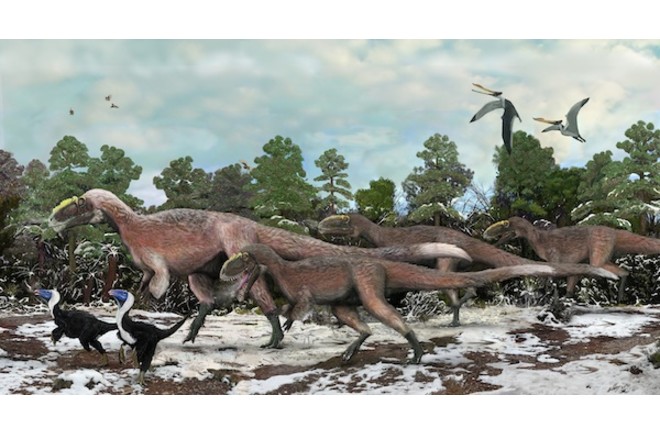
One smoggy afternoon in the summer of 2010, I took a walk down Xi Zhi Men Wai Avenue in Bejing. The ten-lane thoroughfare was packed with cars, buses, pedalos, and bicycles. But even here, in China’s hyperurbanized core, there were birds to keep me company. Sparrows shot around the roadside trees. Black and white magpies perched in the treetops, issuing their rattling calls. I was walking down Xi Zhi Men Wai Avenue to pay a visit to a museum, where I could take a close look at the fossilized remains of some ancient cousins to the magpies. I was going to see some feathered dinosaurs.

Continue reading “The One-Ton Turkey: Further Adventures in Slow-Cooked Science”