 Here’s a round-up of the latest pieces over at Download the Universe, the science ebook review.
Author: Matt Kristoffersen
It’s hard to believe that the World Science Festival is now in its fifth year. What started out feeling like an experiment is now a New York institution. I’m looking forward to participating yet again, and hope you’ll be able to join me.
On Friday I’ll be moderating an event called “Illuminating Resilience.” Four experts will discuss how people withstand life’s hardest shocks, and manage to bounce back.
Continue reading “World Science Festival: Resilience and Books This Weekend”
Just wanted to thank readers who recently sent me requests for signed bookplates. To make sure that I was dealing with human readers, instead of Ebay robots, I asked folks to send me a picture. Here are a few.
The offer continues to stand: if you’ve gotten a book of mine and want to get it signed, I’ve printed up bookplates appropriate to each title. Email a picture with your mailing address and any special signing request.
Originally published May 28, 2012. Copyright 2012 Carl Zimmer.
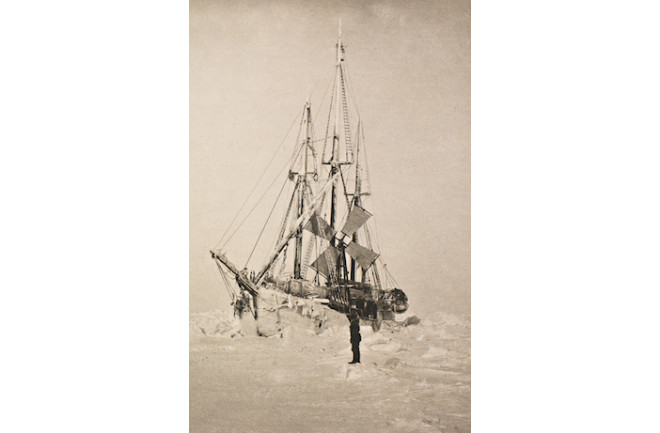
In 1893, the Norwegian zoologist Fridtjof Nansen set off to find the North Pole. He would not use pack dogs to cross the Arctic Ice. Instead, he locked his fate into the ice itself. He sailed his ship The Fram directly into the congealing autumn Arctic, until it became locked in the frozen sea. Nansen was convinced that the ice itself would drift up to the pole, taking him and his crew along for the ride.
For two and a half years they drifted with the pack. It gradually became clear to Nansen that The Fram had stopped moving north and was now traveling east instead, back towards Europe. He leaped out of the ship and tried to sled up to the pole, only to discover that the ice he was now traveling on was moving south. Only four degrees away from true north, he decided to retreat. He bolted back for Franz Josef Land.
Why do flu shots only protect us for a single season? Why can’t influenza vaccines be like polio vaccines: get them in childhood and be done with them? Wouldn’t that be the best way to prepare ourselves for the next pandemic?
These are among the questions that will be addressed at next month’s World Science Festival. To lay the groundwork, I’ve written a blog post at the festival web site on where we stand on the road to a universal flu vaccine. At this point, we have good reason to believe that such a vaccine could be invented. Which makes it all the more urgent that we do so. Check it out.
Originally published May 19, 2012. Copyright 2012 Carl Zimmer.