I’m spending the weekend in Ottawa, where a couple thousand scientists have gathered for the Joint Congress of Evolutionary Biology. I’m drowning in a torrent of fascinating talks, on everything from sexually cannibalistic crickets to the future of the Amazon’s biodiversity. In the evenings, the meeting features high-profile talks–Friday night, the science writer David Quammen spoke about his career, on the occasion of winning the Stephen Jay Gould Prize. I have a particular interest in tonight’s talk, so much so that I’m going to live-blog it. The speaker is one Rosie Redfield, and she’ll be talking about the endlessly intriguing case of Arsenic Life.
Author: Matt Kristoffersen
As I’ve mentioned a couple times, I’ve been working for a couple years with biologist Douglas Emlen on a new textbook about evolution, intended for biology majors. It’s scheduled to be published next month, and we’ve gathered some gratifying endorsements. Here are a selection:
Continue reading “Presenting “Evolution: Making Sense of Life” (and a free app!)”
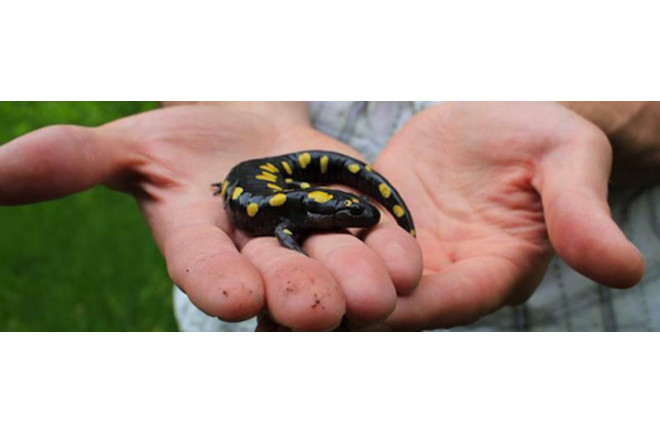
I’ve been doing a fair amount of traveling, and along the way I’ve neglected to point to some pieces of mine that have been coming out. Here they are:
1. Roadside evolution: Traveling to faraway lands to work on a story is one of the great privileges of this gig, but sometimes it’s nice just to head five minutes from your front door and go salamander hunting. That’s what I did for a story about evolution in our own time, which appears in the current issue of Environment Yale.
Continue reading “Catching up: Evolving salamanders, ethical blogging, and my brain on smart drinks”
You can watch the whole first episode of HBO’s new series The Newsroom on Youtube. At no cost, you can marvel at just how awful a show about journalism can be, managing to be exquisitely sanctimonious and clueless at the same time.
Here’s the shtick: Jeff Daniels plays a cable news anchor who discovers his inner Walter Cronkite, as his new producers remember what it’s like to do real journalism. In fact, the first episode is about science journalism. In about fifteen minutes, the producers completely decipher the Horizon oil spill, down to the quality of the concrete and the physics of ruptured deep-sea drills. In the real world, journalists like Julia Whitty at Mother Jones, Richard Harris at NPR and Abraham Lustgarten at ProPublica chewed away for weeks, even months, to get the story. But in Aaron Sorkin’s twisted universe, you can figure it out based on–well, based on a volcano you made for your school science fair project.
Honest! I’ve cued up the tape for you here. Give it till 44:55 and you’ll see I’m not making this up.
Originally published June 26, 2012. Copyright 2012 Carl Zimmer.
After half a year of stormy debate, we are finally getting to see all the gory details about how two teams of scientists produced some disturbing flu viruses. I’ve written about this unfolding story previously here, at Slate, here again, in the New York Times, and back here again.
In tomorrow’s New York Times, I step back and take a look at the two published studies, and talk to experts about what those studies do–and don’t–tell us about how likely we are to face a new flu pandemic in the years to come. There’s still a huge amount about the flu that we don’t know yet, sorry to say. Check it out. (I also spoke with Times editor Michael Mason on this week’s science podcast. Listen here.)
Originally published June 25, 2012. Copyright 2012 Carl Zimmer.