Like a number of other science writers, I’ve become increasingly interested (and concerned) about science’s ability to correct itself. (See my recent pieces about arsenic life, de-discovery, and dysfunctional science.) So I was intrigued by a new project launching today to encourage scientists to embrace the spirit of replication. I write about it at Slate. Check it out.

Originally published August 14, 2012. Copyright 2012 Carl Zimmer.
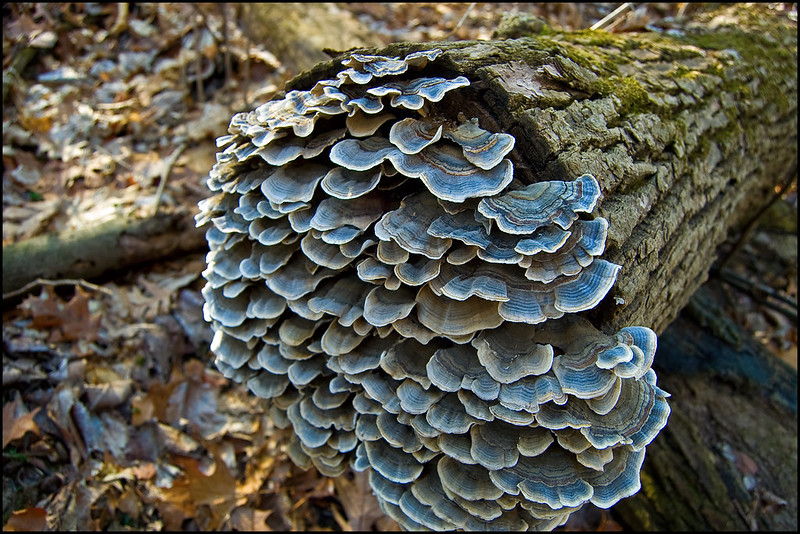
The world, it bears reminding, is far more complicated than what we can see. We take a walk in the woods and stop by a rotting log. It is decorated with mushrooms, and we faintly recall that fungus breaks down trees after they die. That’s true as far as it goes. But the truth goes much further. These days scientists do not have to rely on their eyes alone to observe the fungus on a log. They can drill into the wood, put the sawdust in a plastic bag, go to a lab, and fish the DNA out of the wood. A group of scientists did just this in Sweden recently, sequencing DNA from 38 logs in total. They published their results this week in the journal Molecular Ecology. In a single log, they found up to 398 species of fungi. Only a few species of fungi were living in all 38 logs; many species were limited to just one.

Continue reading “What Lurks In Logs”

Chris Daub writes:

I don’t know if you are still collecting these, but I wanted to send you a pic of my recent tattoo of a Von Karman vortex street. This is a (reasonably) faithful representation of an image from an actual experiment to produce this phenomenon, from the book An Album of Fluid Motion (hope they don’t sue me!).

I’ve always thought it was a beautiful pattern, and I’m fascinated with how it appears in such diverse contexts in a large range of space and time scales. I work in molecular simulation of fluids, so I don’t quite study Von Karman vortices, but this kind of fluid dynamics is at least tangentially related to my field.

You can see the rest of the Science Tattoo Emporium here or in my book, Science Ink: Tattoos of the Science Obsessed.

Originally published August 5, 2012. Copyright 2012 Carl Zimmer.

If you or someone you know is a student at Yale, check out the class I’m teaching this fall. It’s called Writing about Science and the Environment (cross-listed as EVST 215 and ENGL 459). You can find out about it on the Yale Online Course Information site, where I’ve just posted the syllabus.

Originally published August 1, 2012. Copyright 2012 Carl Zimmer.

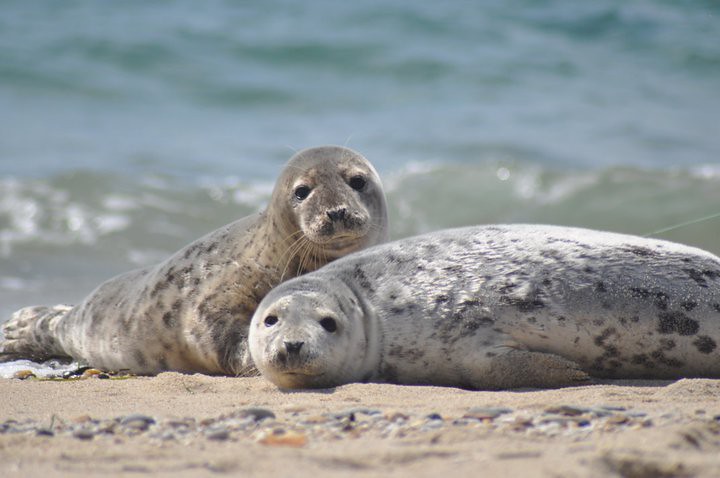
Last September, harbor seal pups in Massachusetts and New Hampshire started to die in droves. In today’s New York Times, I write about what killed them: a new influenza strain that evolved from shorebirds to seals, possibly as recently as last summer. While controversy swirls around scientists experimentally nudging flu viruses across the evolutionary between birds and mammals, Nature has been doing some experiments of its own. Check it out.

PS–The paper is in press at mBio. I’ll post a direct link when there is one, which should be this morning. Update: Here’s the paper.

[Photo of harbor seals in Nantucket by U. S. Fish and Wildlife Service – Northeast Region]

Originally published July 31, 2012. Copyright 2012 Carl Zimmer.