AT 3 pm ET today on NPR’s Talk of the Nation, I’ll be talking about my article this month in the Atlantic about a rare disease that creates a second skeleton, as well as the quandary of people with rare diseases more broadly. I’ll be on with Jeannie Peeper, who has the condition I write about and who is one of the main subjects in my piece.

Update: Here’s the recording of the segment.

Originally published June 10, 2013. Copyright 2013 Carl Zimmer.
Science is not a string of successes. It has its share of errors and misconduct, and acknowledging them does no disservice to the value of scientific research that stands the test of time. So it was a pleasure to review a new book, Brilliant Blunders, by Marco Livio, for the New York Times Book Review. No one is perfect, Livio shows us, even some of the greatest scientists of the modern age. Check it out.

Originally published June 8, 2013. Copyright 2013 Carl Zimmer.

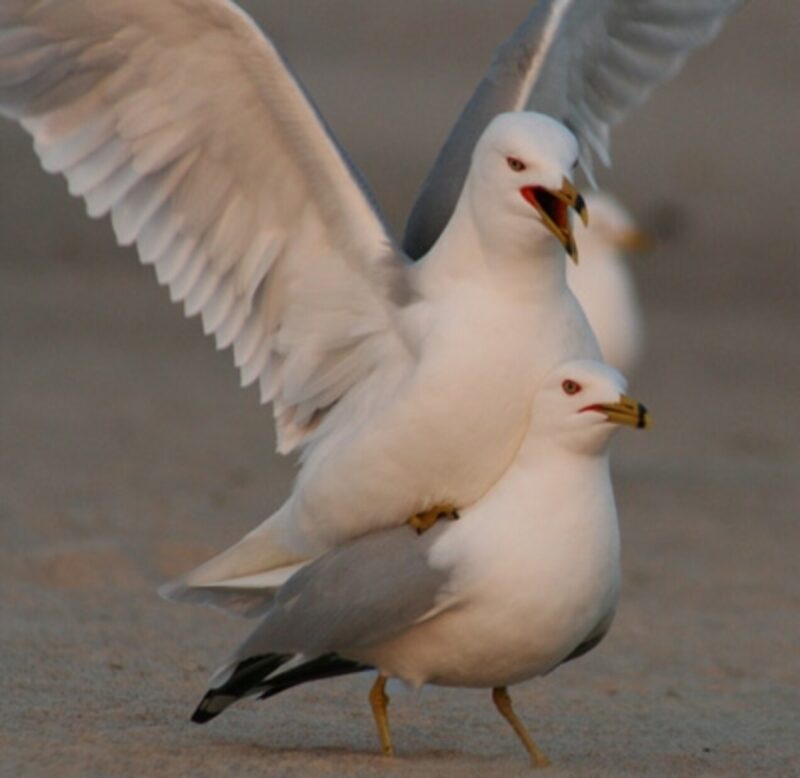
Sex is intriguing in all its forms, and bird sex is particularly intriguing. Some male birds have giant corkscrew-shaped penises, but most have none, thanks to its evolutionary disappearance millions of years ago. For “Matter,” my weekly New York Times column, I take a look at the case of the disappearing penis, and why it’s important to study, despite what some cable news pundits may say.

Check it out!

(And for you anatomy junkies, Ed Yong has more!)

Originally published June 6, 2013. Copyright 2013 Carl Zimmer.

James Snyder noticed one day that a frog had climbed onto a tree in his backyard in southern Florida and swallowed one of his Christmas lights. He snapped this eerie photo in which the light glows through the frog’s stomach, like a herpetological holiday ornament.

This frog’s behavior seems weirdly stupid. But there’s actually a wisdom of sorts in swallowing a Christmas light–if you’re a Cuban tree frog, that is. For thousands of years, the only glows your ancestors ever saw on a tree came from luminescent insects. If they responded to a little glow by attacking, they got a meal. They were more likely to survive and have baby frogs. The frogs that didn’t respond? Some of them may have done just fine. But others may have gone hungry. The males might have struggled to attract a mate; the females might have laid small eggs that failed to develop.

Continue reading “Freeing Animals From Our Evolutionary Traps”

Cancer may not seem to have much to do with evolution, but they’re actually intimately linked. Cancer cells evolve within tumors, becoming better at exploiting our bodies and resisting cancer drugs. We have evolved a number of adaptations to fight cancer–or at least to put it off until past our child-bearing years. The intersection of cancer and evolution has become so fruitful that there’s now a biennial international meeting on the subject. This year, the meeting organizers asked me to give a public lecture on cancer and evolution in San Francisco. My talk, “The Devil’s Tumor,” will take place on Friday, June 14, at 7 pm–followed by a performance by the one and only Baba Brinkman. Details here. I hope Bay Area folk can join us!

Originally published June 4, 2013. Copyright 2013 Carl Zimmer.