Melissa writes,
Author: Matt Kristoffersen
[A post from 2005 I’m fond of]
Clint, the chimpanzee in this picture, died several months ago at a relatively young age of 24. But part of him lives on. Scientists chose him–or rather, his DNA–as the subject of their first attempt to sequence a complete chimpanzee genome. In the new issue of Nature, they’ve unveiled their first complete draft, and already Clint’s legacy has offered some awesome insights into our own evolution.
Continue reading “From the Vault: Clint Is Dead, Long Live Clint!”
[An old post from 2005 I’m fond of]
There was a time not that long ago when sequencing a single gene would be hailed as a scientific milestone. But then came a series of breakthroughs that sped up the process: clever ideas for how to cut up genes and rapidly identify the fragments, the design of robots that could do this work twenty-four hours a day, and powerful computers programmed to make sense of the results. Instead of single genes, entire genomes began to be sequenced. This year marks the tenth anniversary of the publication of the first complete draft of the entire genome of a free-living species (a nasty little microbe called Haemophilus influenzae). Since then, hundreds of genomes have emerged, from flies, mice, humans, and many more, each made up of thousands of genes. More individual genes have been sequenced from the DNA of thousands of other species. In August, an international consortium of databases announced that they now had 100 billion “letters” from the genes of 165,000 different species.
Kristin writes,
“This is a rendition of Andreas Vesalius’ ‘The Quivering Brain.’ I admired many of his anatomy studies in art school, as I spent fifteen years as a painter, but I was always a little more interested in science than art. I even considered a career as a medical illustrator at one point.
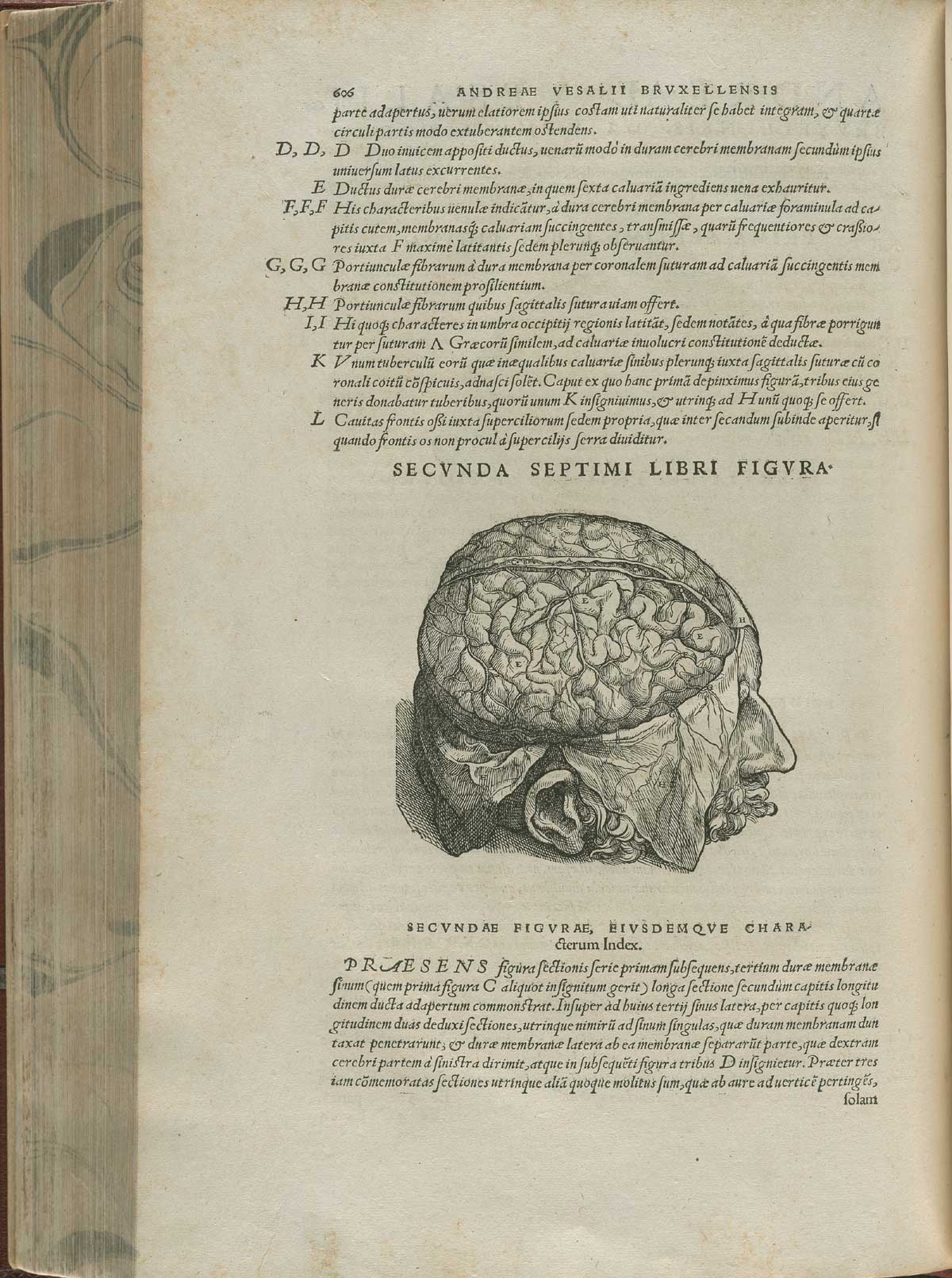
Using science as artistic reference and researching for a painting was my favorite part of painting. Actually, it was the only thing I really enjoyed. It took me many years to realize this. I got this tattoo right before going back to school to study neuroscience. It couldn’t be more perfect.”
You can see the rest of the Science Tattoo Emporium here or in my book, Science Ink: Tattoos of the Science Obsessed.
Originally published July 16, 2010. Copyright 2010 Carl Zimmer.
[An old post I’m fond of]
Spring is finally slinking into the northeast, and the backyard wildlife here is shaking off the winter torpor. Our oldest daughter, Charlotte, is now old enough to be curious about this biological exuberance. She likes to tell stories about little subterranean families of earthworm mommies and grub daddies, cram grapes in her cheeks in imitation of the chipmunks, and ask again and again about where the birds spend Christmas. This is, of course, hog heaven for a geeky science-writer father like myself, but there is one subject that I hope she doesn’t ask me about: how the garden snails have babies. Because then I would have to explain about the love darts.
Continue reading “From the Vault: Love Darts In the Backyard”