Here’s one of the weirder things I’ve come across in biology. When lamp shells are just tiny 36-hour-old embryos–just a clump of a few hundred cells–they can see. Many cells on their outer surface express a photoreceptor gene, and they show evidence of being able to swim towards light. In other words, these lamp shells are swimming eyeballs.

Aside from the surrealism, this discovery is also cool because it might be a model for how our own eyes evolved. Perhaps they started out in a similar way. For more details, check out my story in today’s New York Times.

[Image: Coreldraw]

Originally published March 1, 2011. Copyright 2011 Carl Zimmer.
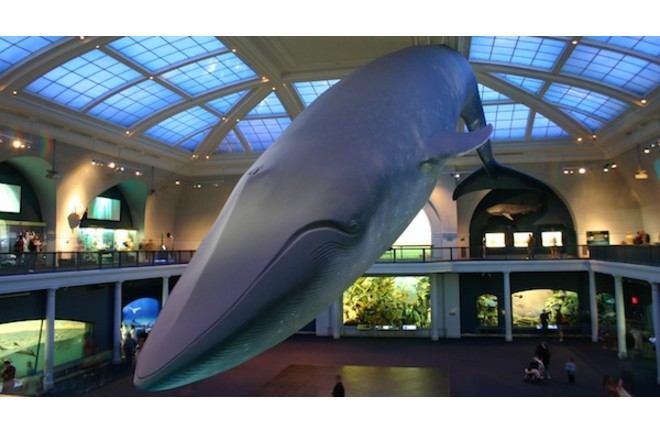
Strictly speaking, there should be no blue whales.

Blue whales can weigh over a thousand times more than a human being. That’s a lot of extra cells, and as those cells grow and divide, there’s a small chance that each one will mutate. A mutation can be harmless, or it can be the first step towards cancer. As the descendants of a precancerous cell continue to divide, they run a risk of taking a further step towards a full-blown tumor. To some extent, cancer is a lottery, and a 100-foot blue whale has a lot more tickets than we do. Continue reading “The Mere Existence of Whales”

I really do have work to do. So I’m profoundly resentful (in the best way possible) that the World Science Festival has launched a video site called WSFtv. Here’s seven minutes of neuroscientist Giulio Tononi (subject of my recent New York Times profile) talking about his theory of consciousness. There is a lot more where that came from.

Originally published February 25, 2011. Copyright 2011 Carl Zimmer.

I’ve had a long-running email conversation with Randy Olson, a biologist-turned-film-maker, about what works and what fails when you are trying to convey science to the world at large. In his documentary Flock of Dodos, Randy looked at how creationists made inroads in his home state of Kansas. Randy argued in the movie that evolutionary biologists needed to learn how to do a better job of talking about their work to the public, especially when there’s a well-funded publicity machine operating on the other side. Otherwise, they end up sounding obtuse and high-handed.

Continue reading “Science Home Movies and Technical Ships in a Bottle”

The Economist reports from this year’s AAAS meeting about a fascinating lecture delivered by the historian of science Lawrence Principe about his quest to figure out the real history of alchemy. Principe has done some impressive work to brush away the Whig history of modern chemistry and understand alchemy on its own terms.

Alchemy is saddled with such a bad reputation that many people don’t appreciate how it played an important role in the birth of modern sciences, such as biochemistry and neurology.

Continue reading “Give the alchemists their credit”