Pain is a paradox. It feels like the most real, objective experience we can have, and yet it can be weirdly malleable. It’s better to think of pain, like memory or vision, not as a simple reflection of the world, but as a strategy we’ve evolved to stay alive. Thinking this way can help make sense of the awful experience of chronic pain, when this urgent signal refers to nothing except a brain caught in its own feedback loops. In my latest column for Discover, I take a look at the latest understanding of pain, and some promising research that uses these insights to search for a new, more rational pain-killer. Check it out.
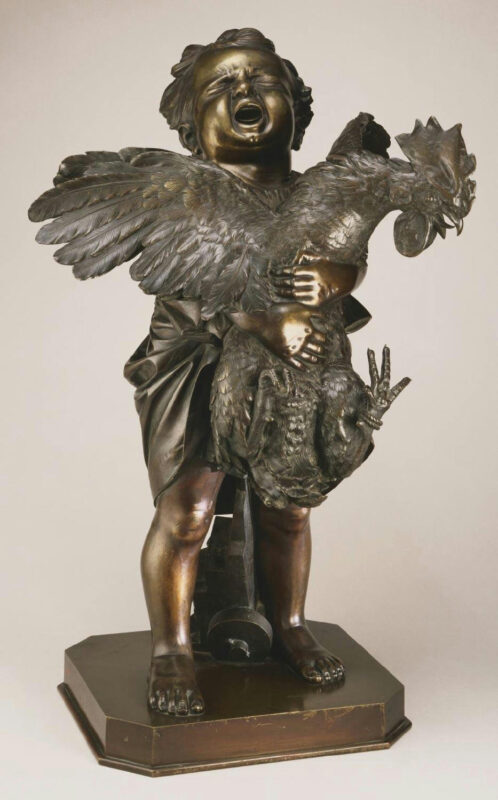
[Image: Boy With A Rooster by Adriano Cecioni, 1868. Photo from Kate Eliot/Flickr via Creative Commons License]
Originally published June 17, 2011. Copyright 2011 Carl Zimmer.