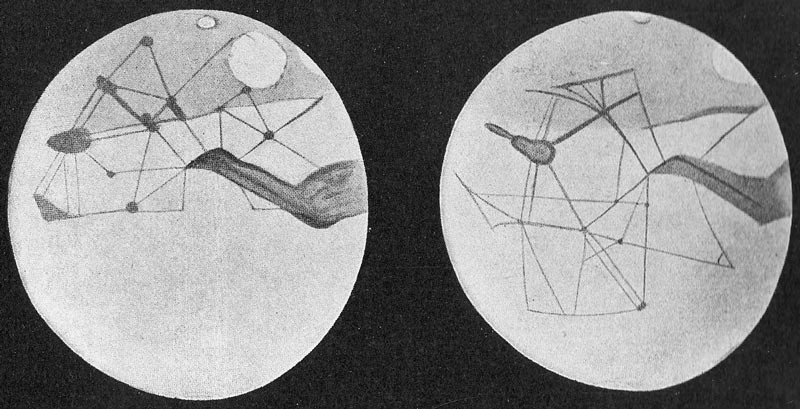
In the late 1800s, prominent astronomers declared that Mars was criss-crossed by canals–evidence, they declared, of an advanced civilization. But in the early 1900s, astronomers gazed through more powerful telescopes and discovered that the canals were mirages.

The astronomer Percival Lowell, who had become the leading champion of the canals, scoffed at the new findings. Hedeclared that the criticism came “solely from those who without experience find it hard to believe or from lack of suitable conditions find it impossible to see.”

Continue reading “Dediscovery: My new essay for a new section of the New York Times”

I just got back yesterday from the annual meeting of the Society for the Study of Evolution. It took place in a big hotel on the outskirts of Norman, Oklahoma, during a windy heat wave that felt like the Hair Dryer of the Gods. It had been a few years since I had last been to an SSE meeting, and I was struck by how genomic everything has gotten. No matter how obscure the species scientists are studying, they seem to have outrageous heaps of DNA sequence to analyze. A few years ago, they would have been content with a few scraps. Fortunately, SSE hasn’t turned its back on good old natural history. There were lots of fascinating discoveries on offer, about species that I had assumed had been studied to death. My favorite was a talk about the rough-skinned newt, the most ridiculously poisonous animal in America.

Continue reading “A Beautiful Web of Poison Extends A New Strand”

The Wall Street Journal asked me to review another book. This time around it’s Virolution, by Frank Ryan. It’s about a lot of things that I’m pretty crazy about (like the viruses that make up a lot of our genome). But I wasn’t crazy about the book itself, I’m afraid. Still, the review was a good opportunity to talk about what our inner viruses may mean for our well-being. Check it out.

Originally published June 18, 2011. Copyright 2011 Carl Zimmer.