Zsuzsa Megyery writes,

I’m a student at MIT in the Earth, Atmospheric & Planetary Science Department hoping to solve the glacially-coupled climate problem of global warming by developing efficient carbon sequestration technology. In honor of our beautiful mother Earth, and as a constant reminder of the places I can go under my own human power, I had the world map, minus Antarctica, tattooed on the tops of my feet in a Mercator projection.

It is deeply personal to me–I am Hungarian, with the European continent on one foot–but grew up in the US–so the Western half is on the other side. I have a minimal carbon footprint on our mother Earth, cycling as much as possible for transportation and even hoping to circum-paddle Antarctica some day.

You can see the rest of the Science Tattoo Emporium here  or in my book, Science Ink: Tattoos of the Science Obsessed.

Originally published November 21, 2011. Copyright 2011 Carl Zimmer.

Our brains are protected by an invisible fortress wall, keeping it safe from many dangers. Unfortunately, it also keeps out a lot of the drugs that could help cure diseases of the brain. In this month’s column for Discover, I look at some of the newest strategies for scaling the wall. Check it out.

Image: Ken Lund, Flickr, via Creative Commons

Originally published November 16, 2011. Copyright 2011 Carl Zimmer.

Radiolab has a new episode available for your auditory pleasure. The theme of this episode is “Patient Zero.” Hosts Jad Abumrad and Robert Krulwich trace diseases and ideas back to their places of origin. I help tell the story of the origin of HIV along with David Quammen (who’s got a book  coming out soon on animal diseases) and some of the pioneering scientists who have figured out how viruses spill over from animals to us.)

Check it out!

Originally published November 15, 2011. Copyright 2011 Carl Zimmer.

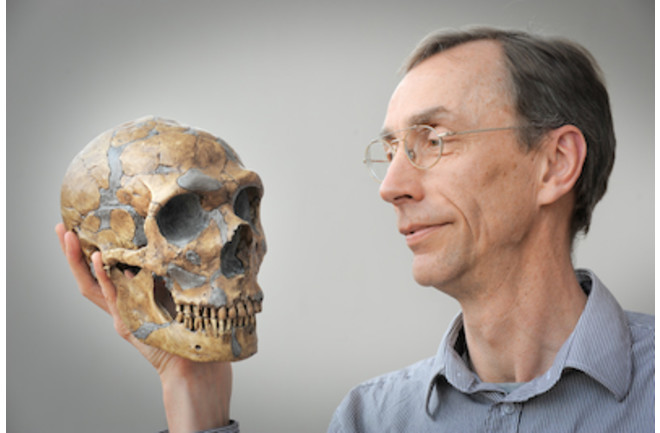
When the Society for Neuroscience gets together for their annual meeting each year, a city of scientists suddenly forms for a week. This year’s meeting has drawn 31,000 people to the Washington DC Convention Center. The subjects of their presentations range from brain scans of memories to the molecular details of disorders such as Parkinson’s and autism. This morning, a scientist named Svante Paabo delivered a talk. Its subject might make you think that he had stumbled into the wrong conference altogether. He delivered a lecture about Neanderthals.

Yet Paabo did not speak to an empty room. He stood before thousands of researchers in the main hall. His face was projected onto a dozen giant screens, as if he were opening for the Rolling Stones. When Paabo was done, the audience released a surging crest of applause. One neuroscientist I know, who was sitting somewhere in that huge room, sent me a one-word email as Paabo finished: “Amazing.”

Continue reading “Neanderthal Neuroscience”

Two pieces of Science Ink related news:

1. The New York Times put together a slide show from the book (including several tattoos that I haven’t published on the blog). Check it out.

2. New Scientist offered this kind review (sub’n required):

“When Carl Zimmer asked on his blog whether tattoos were common among scientists, he unwittingly became the curator of a set of incredible images, and of intimate stories that reveal a love affair with science. We are familiar with the idea that people tattoo themselves with a name or symbol representing the great love in their life. Those who love science are no different. Zimmer was inundated with responses.

Continue reading “#scienceink update: The New York Times does a slide show, and New Scientist approves”