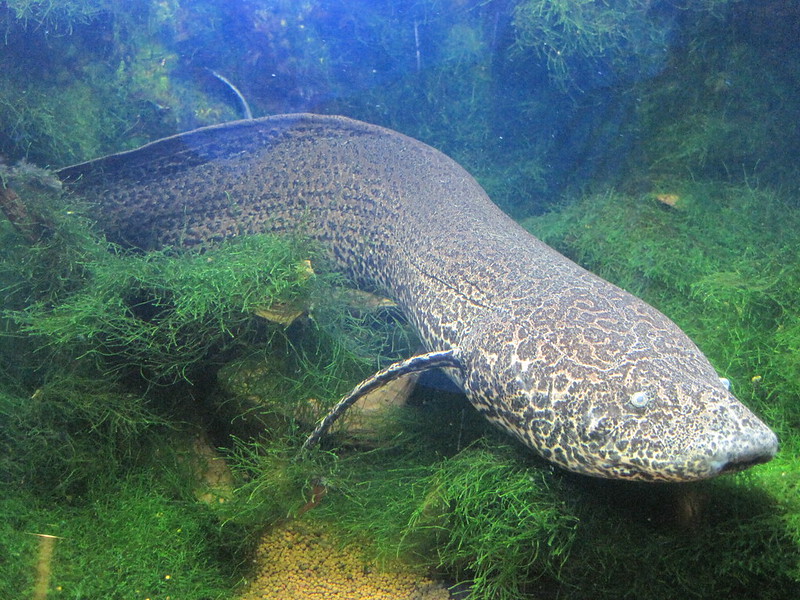
Long before Darwin published The Origin of Species, there was talk of evolution. The more acquainted naturalists became with the major groups of animals, the gaps between them grew smaller. Once it seemed as if mammals were profoundly different than other vertebrates, for example. And then European explorers encountered the platypus, a mammal that laid eggs. Perhaps the major groups of animals had not been separately created, some naturalists suggested. Perhaps life had changed over time.
Continue reading “A Long Walk To Land”

There are 100 trillion microbes that live in your body. Do you own them? Do they deserve the same protections as your own genes and cells? If someone genetically alters a microbe and claims that if you swallow it, it will let you lose weight, should that living germ be regulated as a drug?

Continue reading “Do you own your germs? My new piece for the New York Times on micro-bioethics”

It’s been a busy week for Science Ink!

1. Science Ink was on TV. The Daily Planet, a Canadian science news show on the Discovery Channel, interviewed me about my favorite tattoos.

2.The Irish Times put Science Ink on top of its list of science books for holiday gifts. (As did MSNBC and io9.)

3. Der Spiegel  takes a look.

4. The Toronto Star has a whole package on Science Ink in Saturday’s issue: A Q&A with yours truly, an article by Megan Ogilvie about Toronto-area scientists with tattoos, and a slide show of their tattoos. (I was amazed that there were lots of tattoos I had never seen before!)

5. Just a reminder to folks in Boston: I will be giving a lecture at the Harvard Museum of Natural History on Tuesday, 12/13 at 6 pm. The lecture is free and open to the public. (The parking is free too!) Details are here.

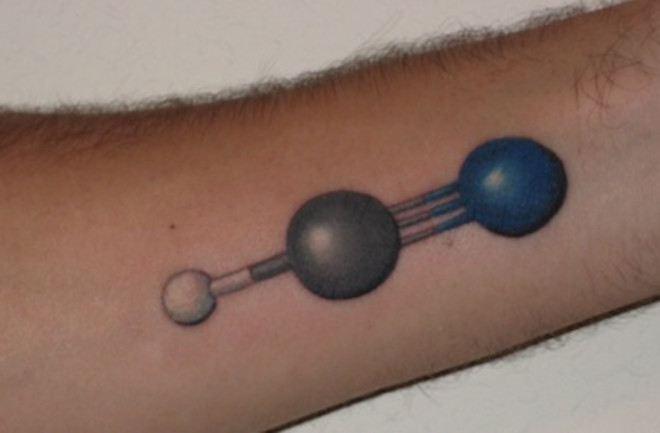
[This tattoo of cyanide is from David Lighthart.]

Originally published December 2, 2011. Copyright 2011 Carl Zimmer.

Today marks the one-year anniversary of the Arsenic Life Affair. On December 2, 2010, NASA-funded scientists announced that they had discovered a microbe in Mono Lake that broke the rules of biology. They claimed it could build DNA from arsenic rather than phosphorus. It was a sensational claim, and it was greeted by a spectacular backlash.

Alan Boyle takes a close look at arsenic life on its first birthday over at MSNBC. Other scientists have yet to report whether they can replicate the results or not (the bet of many experts is on not). Meanwhile, other researchers are studying its biology, sequencing its genome, and otherwise investigating it as they would any new microbe. It seems as if the arsenic life affair is morphing into regular science. Which may be about as good of an ending as one could hope.

Continue reading “Happy Birthday, #arseniclife”