In caves around the world, animals and other creatures have adapted to endless night. Cavefish, for example, have lost their eyes and pigment, evolving a greater power in other senses.

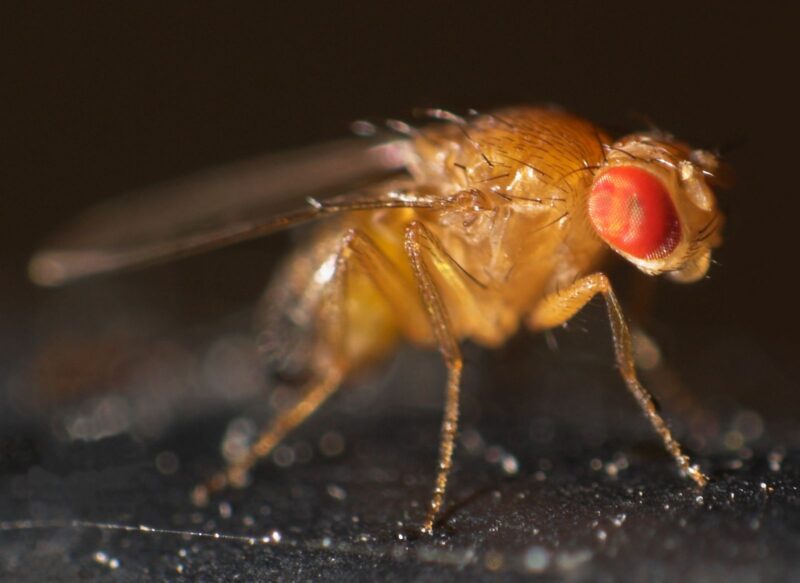
In 1954, Syuichi Mori, a biologist at Kyoto University, put flies into a cave of their own. He took eggs from ordinary flies of the species Drosophila melanogaster put them in milk bottles, which he placed in pots and covered in dark cloth. There they lived in utter darkness. He tended to the flies, generation after generation, dividing them into three separate lines. Meanwhile, he reared three lines of flies in normal light for comparison.
Continue reading “Fifty-seven Years of Darkness”

One thing that’s fascinated me about the ongoing debate about the manipulated bird flu (check out my pieces for Slate, the Loom, and the Times for background) is that it comes down, in large part, to information. Should the scientists who turned bird flu into a mammal-to-mammal virus make the details of their experiments public?

The debate has also touched on the concern that the viruses themselves might escape their labs. And yet the physical viruses have remained mostly in the background. If the information alone manages to get out, that might be enough for virologists to recreate the viruses. In fact, at a recent meeting about the flu in DC, a lot of the discussion about the security of these virus strains centered on the hard drives where the data is now stored.

Continue reading “Bird Flu: Any Information to Declare?”

I’m delighted to be able to share the handsome cover of my next book. For the past couple years, I’ve joined forces with University of Montana biologist Douglas Emlen to write a textbook about evolution for biology majors. We built the book with some elements from my 2009 textbook for nonmajors, The Tangled Bank, along with much more math, additional concepts, detailed explorations of recent and classic studies on evolution, and study questions.

The book is slated to be published on August 15, 2012, in time for fall classes (here’s the book page on the publisher’s site). We’re still ripping through the final proofs, but as soon as the cover was officially approved, I had to share it. The insects are walking leaves, which are not only beautiful, but a marvelous example of evolution at work.

Originally published March 10, 2012. Copyright 2012 Carl Zimmer.

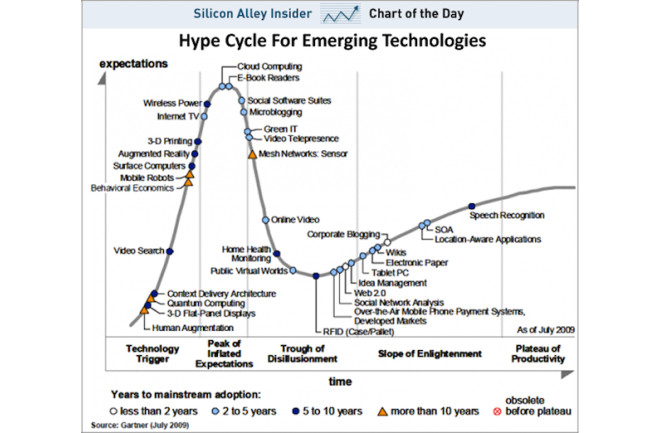
I think one of the biggest struggles a science writer faces is how to accurately describe the promise of new research. If we start promising that a preliminary experiment is going to lead to a cure for cancer, we are treating our readers cruelly–especially the readers who have cancer. On the other hand, scoffing at everything is not a sensible alternative, because sometimes preliminary experiments really do lead to great advances. In the 1950s, scientists discovered that bacteria can slice up virus DNA to avoid getting sick. That discovery led, some 30 years later, to biotechnology–to an industry that enabled, among other things, bacteria to produce human insulin.

This challenge was very much on my mind as I recently read two books, which I review in tomorrow’s Wall Street Journal. One is on gene therapy–a treatment that inspired wild expectations in the 1990s, then crashed, and now is coming back. The other is epigenetics, which seems to me to be in the early stages of the hype cycle. You can read the essay in full here.

[Image: Wikipedia]