The New York Times, February 6, 2014

Link

Cancer is a disease of genes gone wrong. When certain genes mutate, they make cells behave in odd ways. The cells divide swiftly, they hide from the immune system that could kill them and they gain the nourishment they need to develop into tumors.

Scientists started identifying these cancer genes in the 1970s and their list slowly grew over the years. By studying them, scientists came to understand how different types of cancer develop and in some cases they were even able to develop gene-targeting drugs. Last May, for example, the Food and Drug Administration approved a drug known as Tarceva as a first-line treatment for lung cancer in which a gene called EGFR has mutated.

Continue reading “A Catalog of Cancer Genes That’s Done, or Just a Start”
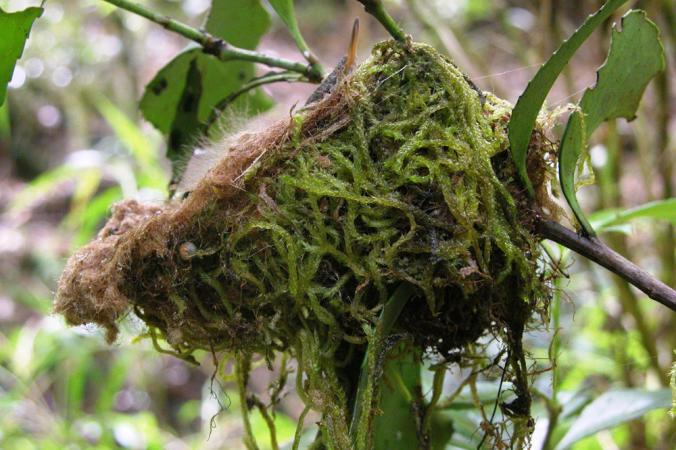
FIRECROWN HUMMINGBIRD NEST. COPYRIGHT FELIPE OSORIO-ZUÑIGA

When we think of a nest, we think simply of a natural piece of construction. A bird gathers together twigs and stems and leaves and assembles them into a shelter for its eggs. We don’t think much about the plants it uses. They’re just building material.

But in at least some cases, there may be more to a nest than meets the eye. It may be a cooperative breeding project, produced by two partners–animals and plants. Continue reading “A Living Nest?”

COPYRIGHT: NEANDERTHAL MUSEUM/H. NEUMANN

For my new “Matter” column in the New York Times, I look at the latest advance in our understanding of Neanderthal DNA. Neanderthals and humans interbred about 40,000 years ago, and their DNA is still in human genomes today. Scientists are mapping those Neanderthal genes we carry, and figuring out which ones have benefited us and which have made us sick.

One thing I didn’t have room to discuss is a question that I keep asking and to which scientists always respond with intriguingly noncommittal answers: Are Neanderthals members of our own species? Are they Homo sapiens? Are they a subspecies–Homo sapiens neanderthalensis? Or are they a separate species–Homo neanderthalensis? Continue reading “Neanderthals: Intimate Strangers”

The New York Times, January 29, 2014

Link

Ever since the discovery in 2010 that Neanderthals interbred with the ancestors of living humans, scientists have been trying to determine how their DNA affects people today. Now two new studies have traced the history of Neanderthal DNA, and have pinpointed a number of genes that may have medical importance today.

Among the findings, the studies have found clues to the evolution of skin and fertility, as well as susceptibility to diseases like diabetes. More broadly, they show how the legacy of Neanderthals has endured 30,000 years after their extinction.

“It’s something that everyone wanted to know,” said Laurent Excoffier, a geneticist at the University of Bern in Switzerland who was not involved in the research.

Continue reading “Neanderthals Leave Their Mark on Us”

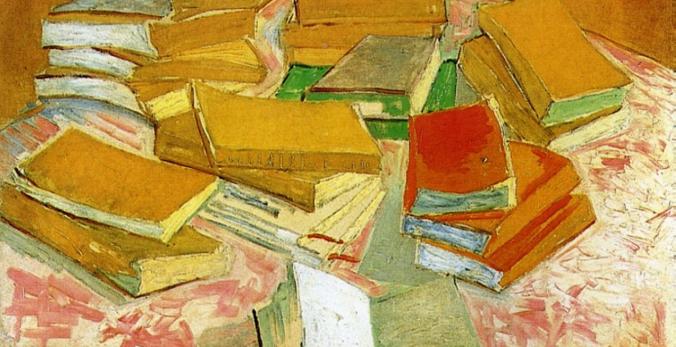
DETAIL FROM “STILL LIFE – FRENCH NOVELS,” BY VAN GOGH. VIA WIKIPAINTINGS

I’m reviewing a memoir by a scientist, and it’s gotten me reflecting on this peculiar sub-genre. I started thinking about especially good examples–in particular, ones that manage to balance the personal experiences of the author with the professional accomplishments. I ended up thinking aloud about it on Twitter, and ended up with a spontaneous reading list that had some usual suspects but also some intriguing surprises. Here it is (Note: Please be sure to click the blue bar labeled “Read Next Page.” There are a lot more!) Continue reading “Memoirs by Scientists: A Crowd-Sourced List”