PHOTO BY RAM GAL, BEN-GURION UNIVERSITY

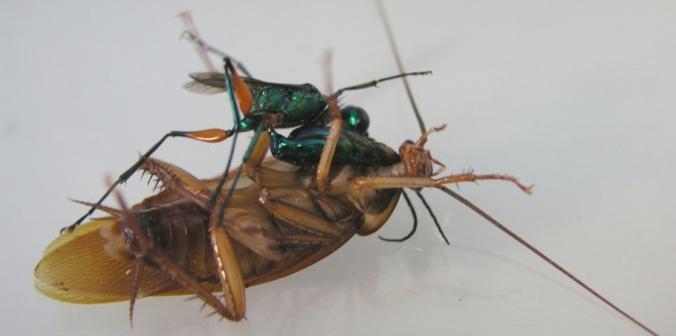
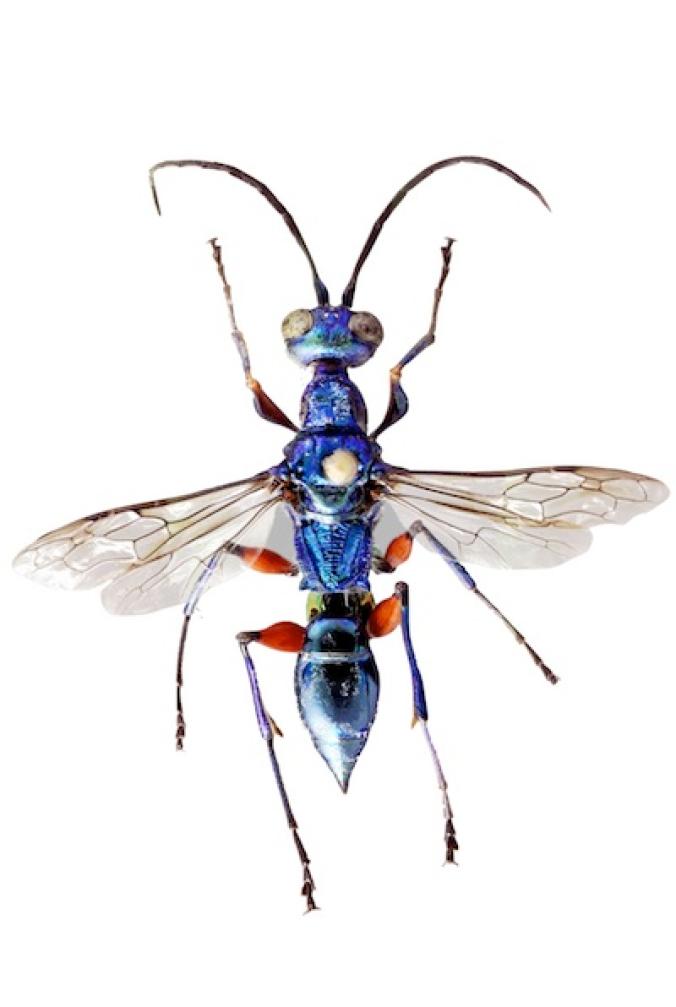
If you’ve never met the emerald jewel wasp, let me introduce you to my little friend. The wasp (Ampulex compressa) lives the first stage of its life as a parasite, growing inside the body of a living cockroach. 

Ampulex compressa. Photo by K. Seltmann, via Creative Commons. Link: http://www.morphbank.net/?id=102143

That’s absorbingly horrific on its own, but how it gets into the cockroach in the first place is an especially gruesome delight. Its mother has to play neurosurgeon. Continue reading “Crawling Through The Brain Without Getting Lost”

The New York Times, February 27, 2014

Link

Forcing male flies into monogamy has a startling effect: After a few dozen generations, the flies become worse at learning.

This discovery, published on Wednesday in the Proceedings of the Royal Society, isn’t a biological excuse for men who have strayed from their significant other. Instead, it’s a tantalizing clue about why intelligence evolved.

The new study was carried out by Brian Hollis and Tadeusz J. Kawecki, biologists at the University of Lausanne in Switzerland. They investigated a fly species called Drosophila melanogaster that normally has a very un-monogamous way of life.

Continue reading “Stupider With Monogamy”

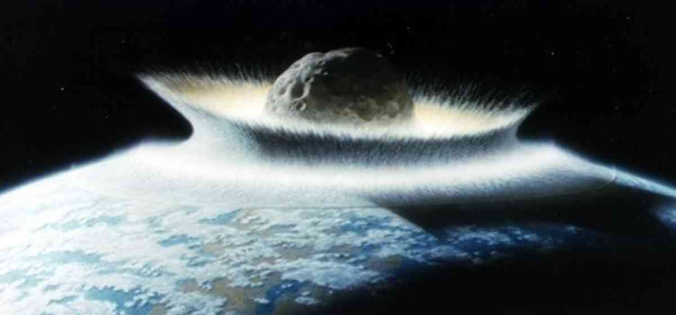
A GIANT IMPACT ON THE EARLY EARTH. PAINTING BY DON DAVIS/NASA

About 4.567 billion years ago, a quivering bead of magma 93 million miles from the Sun cooled down until it grew a skin of rock. Eventually, it would be named Earth. We don’t know a lot about what the planet was like back then, because that primordial crust is almost entirely recycled–eroded away, pushed back down into the molten depths of the planet, or smashed to bits by the huge impacts that blasted Earth for its first few hundred million years.

Geologists have wandered the planet to find scraps of the infant Earth. One mineral that is particularly precious to them is known as a zircon. Tiny zircon crystals can withstand billions of years of abuse–getting ripped out of their original rock, incorporated into new rocks, heated up, and squeezed at tremendous pressures–and yet still retain their original chemistry. Zircons have the added attraction of holding onto radioactive isotopes such as uranium. Over billions of years, the uranium decays at a steady rate into lead. By measuring the atoms of uranium and lead in a zircon, scientists can get a tight estimate of the zircon’s age. Continue reading “Searching For the Oldest Pieces of Earth”


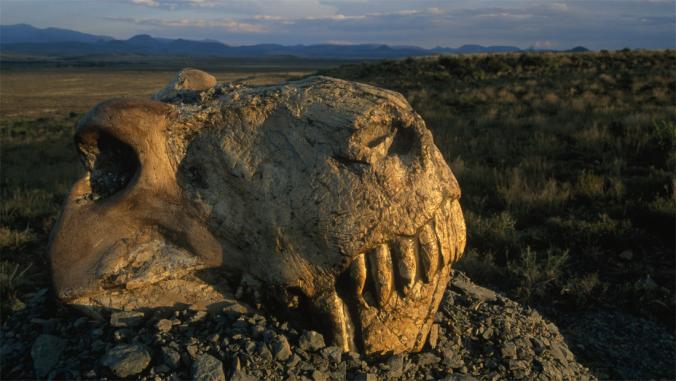
SKULL OF DINOGORGON IN SOUTH AFRICA. MANY SUCH MAMMAL-LIKE SPECIES BECAME EXTINCT 252 MILLION YEARS AGO. PHOTO BY JONATHAN BLAIR/NATIONAL GEOGRAPHIC

Around 252 million years ago, as many as 96 percent of all species on Earth became extinct. For my new “Matter” column in the New York Times, I write about the scientists who are trying to solve this great murder mystery, and what their work may tell us about how the planet may respond to our own disruptions. Check it out. Continue reading “The Ultimate Cold Case”

The New York Times, February 20, 2014

Link

Sam Bowring is officially a geologist at M.I.T. Unofficially, he’s a homicide detective trying to solve the ultimate cold case. Dr. Bowring wants to understand how an estimated 96 percent of all species on Earth became extinct at the end of the Permian Period 252 million years ago. It was the biggest of the five mass extinctions recorded in the fossil record. But because this killing happened so long ago, the culprit has evaded discovery for decades.

Dr. Bowring and his colleagues have now gotten an important break in the case. They’ve made the most precise measurement yet of how long it took for all those species to become extinct. 

Continue reading “Seeking a Break in a 252 Million-Year-Old Mass Killing”