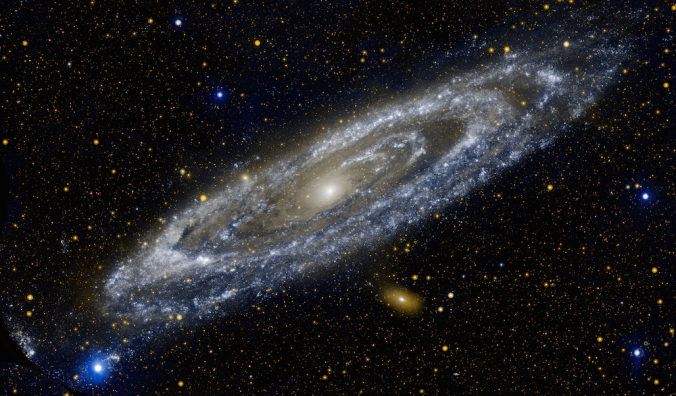
ANDROMEDA GALAXY. NASA

Fifteen months ago, Virginia Hughes, Brian Switek, Ed Yong, and I joined National Geographic to form Phenomena. I’m delighted that our circle is now expanding. Starting today, science writer Nadia Drake will be writing “No Place Like Home.” I’ve followed Nadia’s work for the past couple years, but I’ve never had the chance to talk to her. To celebrate her debut, I asked her some questions about her past and future. Continue reading “Please Welcome Nadia Drake, the Newest Member of Phenomena”
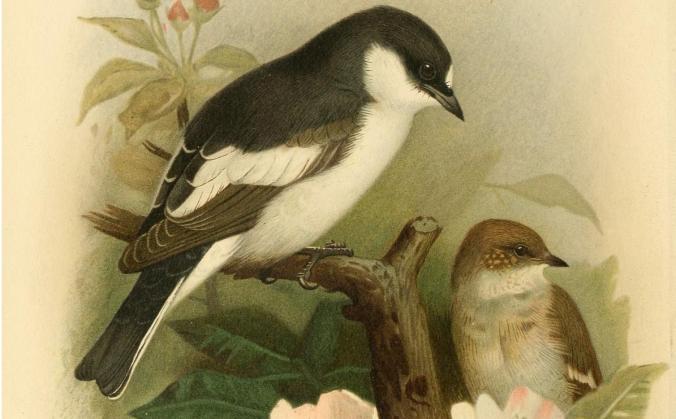
PIED FLYCATCHERS. FROM COLOURED FIGURES OF THE BIRDS OF THE BRITISH ISLANDS, ISSUED BY LORD LILFORD BIODIVERSITY HERITAGE LIBRARY VIA CREATIVE COMMONS/FLICKR.

Parasites can take many forms. Just this week, I’ve written about a giant virusthat reproduces inside amoebae (and has survived being frozen 30,000 years in permafrost), along with a wasp that performs brain surgery to zombify hosts for its young. Viruses and wasps are radically different organisms–some would say that viruses don’t even deserve the label of organism. And they make use of their hosts in different ways. The virus sits inside a cell, manipulates its biochemistry to build virus proteins and DNA. The wasp, on the other hand, sips fluids inside a still-living roach, and builds its own proteins and DNA–and then becomes a free-living creature that can climb out of its host and fly away.

So why are they both parasites? The answer lies beyond the details of anatomy and molecules. It’s all about relationships. Continue reading “The Information Parasites”

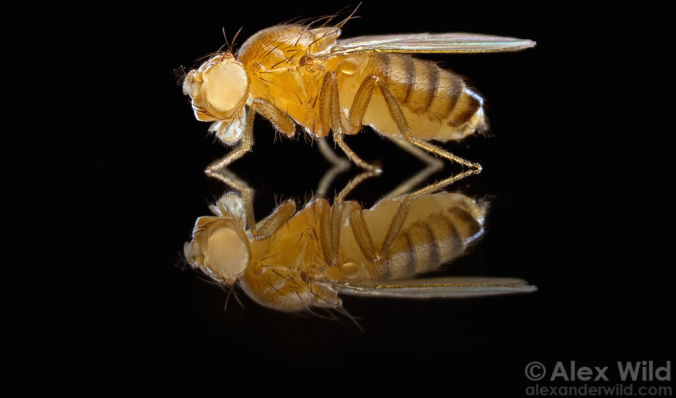
MALE DROSOPHILA MELANOGASTER EVOLVE TO BE WORSE AT LEARNING WHEN THEY MATE MONOGAMOUSLY. COPYRIGHT ALEX WILD. SOURCE

My late winter is revving up into a state of rolling semi-controlled chaos, and so I’ve let a few items slip here at the Loom. Consider this a catch-up post.

1. On Thursday, I wrote my “Matter” column for the New York Times about an intriguing experiment on the evolution of learning. As I’ve written before, animals pay a price to become better learners, and so scientists have been investigating what the benefits are for different species. It turns out that competition for sex can drive the evolution of better learning, at least in flies. Randomly pairing flies into monogamous couples for a hundred generations leads to worse learning. Continue reading “Catching Up: Resurrected Viruses, Sex-Driven Smarts, And Some Upcoming Talks”

The New York Times, March 3, 2014

Link

Siberia fills the heads of scientists with dreams of resurrection. For millions of years, its tundra has gradually turned to permafrost, entombing animals and other organisms in ice. Some of their remains are exquisitely well preserved — so well, in fact, that some scientists have nibbled on the meat of woolly mammoths.

Some researchers even hope to find viable mammoth cells that they can use to clone the animals back from extinction. And in 2012, Russian scientists reported coaxing a seed buried in the permafrost for 32,000 years to sprout into a flower.

Continue reading “Out of Siberian Ice, a Virus Revived”

National Geographic, February 28, 2014

Link

Van Wedeen strokes his half-gray beard and leans toward his computer screen, scrolling through a cascade of files. We’re sitting in a windowless library, surrounded by speckled boxes of old letters, curling issues of scientific journals, and an old slide projector that no one has gotten around to throwing out.

“It’ll take me a moment to locate your brain,” he says.

On a hard drive Wedeen has stored hundreds of brains—exquisitely detailed 3-D images from monkeys, rats, and humans, including me. Wedeen has offered to take me on a journey through my own head.

Continue reading “Secrets of the Brain”