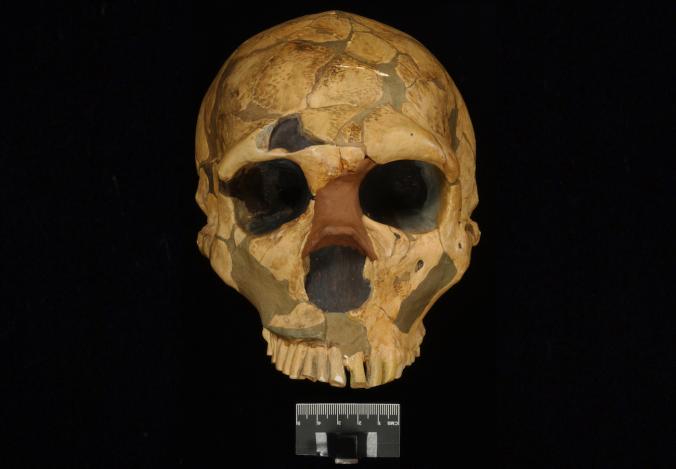
The Natural History Museum London
REPLICA OF NEANDERTHAL SKULL

I’ve been traveling again this week, which makes blogging a challenge. But I still can still offer a couple pieces of reading for your weekend diversion.

–Over the years, I’ve written many articles about the amazing work of Svante Paabo, who has pioneered methods for salvaging ancient DNA from fossils. (Here’s my most recent piece, on the entire genome of a Neanderthal extracted from a toe bone.)

The New York Times Book Review asked me to read Paabo’s new memoir, Neanderthal Man. Here’s my review. As I note in the piece, memoirs by scientists are a tricky genre. Very often, scientists want to delve into fine detail about their research, while tossing off frustratingly fragmented bits about their personal lives. As I was reading Neanderthal Man and getting a bit frustrated by fleeting references to a secret father and such, I asked people on Twitter about their favorite memoir by a scientist. I Storified the ensuing conversation here. Continue reading “Weekend Reading: The Long Road to Ancient DNA, and Gene-Stealing Ferns”
The New York Times, April 17, 2014

Link

In the debate over genetically modified crops, one oft-said word is “unnatural.” People typically use it when describing how scientists move genes from one species into another.

But nature turns out to be its own genetic engineer. Genes have moved from one species of plant to another for millions of years.

Scientists describe a spectacular case this week in The Proceedings of the National Academy of Sciences in which ferns acquired a gene for sensing light from a moss-like plant called hornwort. Gaining the gene appears to have enabled the ferns to thrive in shady forests.

Continue reading “Plants That Practice Genetic Engineering”

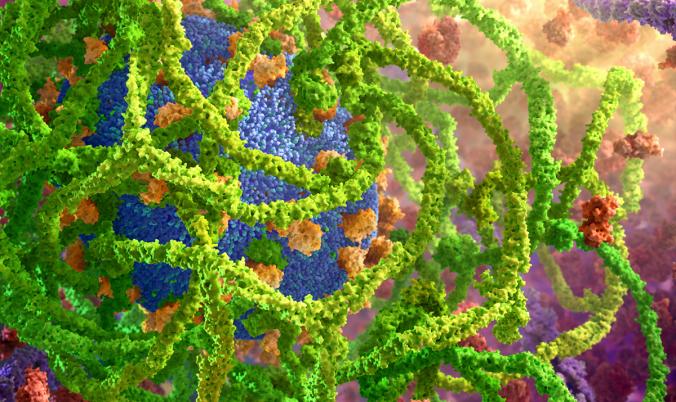
Photo: Harvard University and XVIVO Scientific Animation
PROTEINS CALLED CLATHRINS GUIDE THE FORMATION OF A BUBBLE-LIKE VESICLE INSIDE A CELL

I am an unreconstructed fan of biology visualizers, the da Vincis of the twenty-first century. So I was particularly pleased to learn of a gorgeous new video that conveys the squiggly complexity inside a cell. That video–and the aesthetic decisions behind it–are the topic my newest column for The New York Times. Check it out. Continue reading “Your Inner Mosh Pit”

The New York Times, April 10, 2014

Link

If you could shrink down to the size of a molecule and fly into a cell, what would you see?

In 2006, a team of scientists and illustrators offered a gorgeous answer in the form of a three-minute video called “The Inner Life of the Cell.” Nothing quite like it had ever been made before, and it proved to be a huge hit, broadcast by museums, universities and television programs around the world.

The video was a collaboration between BioVisions, a scientific visualization program at Harvard’s department of molecular and cellular biology, and Xvivo, a scientific animation company in Connecticut.

Continue reading “Watch Proteins Do the Jitterbug”

Over the years, as I’ve learned about the microbes that help keep us healthy, some of the most interesting conversations I’ve had about the microbiome have been with Martin Blaser. He’s a microbiologist at the New York School of Medicine, where he and his colleagues have found tantalizing links between the diversity of microbes in people’s bodies and medical conditions ranging from asthma to obesity. While those results are preliminary, they’ve led Blaser to worry about the long-term consequences of our torrid love affair with antibiotics. As we overdose on antibiotics to kill bad germs, we may be driving some good germs extinct.

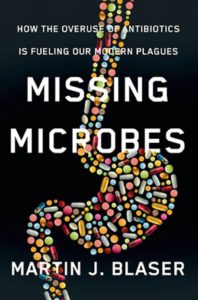
In the latest issue of Wired, I interview Blaser about his work. And if you want to find out more, his new book, Missing Microbes, has just been published. It’s an excellent look at one of the most intriguing fields of biology today.


Originally published April 9, 2014. Copyright 2014 Carl Zimmer.