Evolution is complex–does that mean it’s too complex to predict? Biologists used to leave the question to philosophers (or to philosophically-minded biologists). But in a new feature for Quanta, in a new feature for Quanta, in a new feature for Quanta, I look at cases where evolution is indeed predictable–including some upon which lives depend, such as the evolution of the flu and cancer.
Author: admin
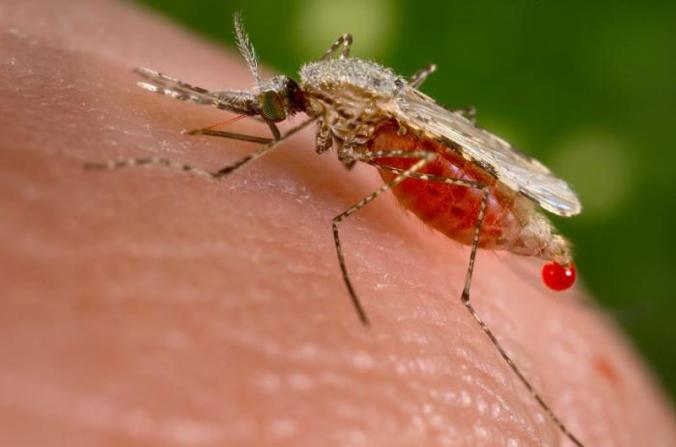
There’s a new way to edit DNA. It’s called CRISPR, and it’s taking science by storm. Its versatility and speed have led scientists to explore all sorts of uses for it. One of the most radical ideas--proposed today in a pair of papers–is to use it to alter the DNA of species we want to get rid of. Think of malaria-bearing mosquitoes, bat-killing fungi, and the like. It’s a provocative idea, but does it threaten to do more harm than good? I take a look at the issue in my new “Matter” column for the New York Times. Check it out.
Originally published July 17, 2014. Copyright 2014 Carl Zimmer.
The New York Times, July 17, 2014
Every year, malaria-carrying mosquitoes kill more than 600,000 people, most of them children. Over the centuries, people have battled those mosquitoes in numerous ways, like draining swamps, spraying insecticides and distributing millions of bed nets. And yet malaria remains a menace across much of the world.
A new technology for editing DNA may allow scientists to render the insects resistant to the malaria parasite, the authors contend. Or it might be possible to engineer infertility into mosquito DNA, driving their populations into oblivion.
Continue reading “A Call to Fight Malaria One Mosquito at a Time by Altering DNA”
Quanta Magazine, July 17, 2014
Michael Lässig can be certain that if he steps out of his home in Cologne, Germany, on the night of Jan. 19, 2030 — assuming he’s still alive and the sky is clear — he will see a full moon.
Lässig’s confidence doesn’t come from psychic messages he’s receiving from the future. He knows the moon will be full because physics tells him so. “The whole of physics is about prediction, and we’ve gotten quite good at it,” said Lässig, a physicist at the University of Cologne. “When we know where the moon is today, we can tell where the moon is tomorrow. We can even tell where it will be in a thousand years.”
Continue reading “The New Science of Evolutionary Forecasting”
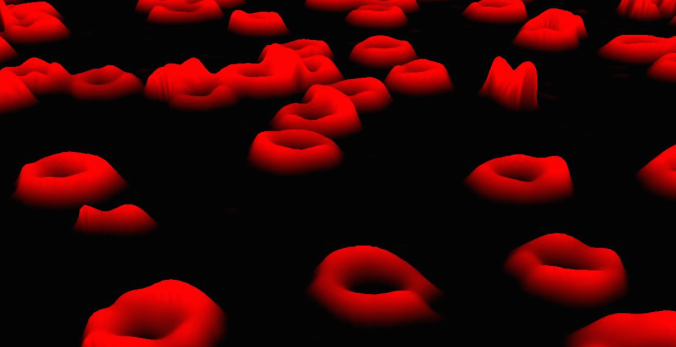
Knowing your blood types can be a matter of life and death. So you might think that scientists had a clear idea of why we have them in the first place. I’ve written a feature for Mosaic, a new online magazine about medicine, in which I try to get the answer. It proves a lot harder than I expected. Check it out.