SANSIBAR VIA FLICKER/CREATIVE COMMONS HTTPS://FLIC.KR/P/DPKJE

I can still remember the shock I felt when I heard about fecal microbiota transplants for the first time. It is not the sort of thing you forget.

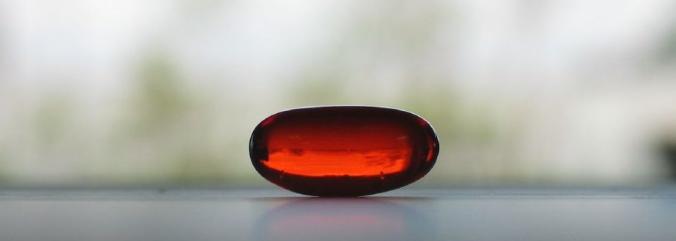
At a microbiology conference, a scientist was giving a lecture about the microbiome–the microbes that live harmlessly inside of us. She described one unusual case she was involved in where a doctor named Alexander Khorutsused the microbiome to save a patient’s life. The patient had taken antibiotics for a lung infection. While the drugs cleared that infection, they  also disrupted the ecology of her gut, allowing a life-threatening species of bacteria called Clostridium difficile to take over. The pathogen was causing horrific levels of diarrhea. Khoruts couldn’t stop it, because it was resistant to every antibiotic he tried.

So Khoruts decided to use an obscure method: the fecal transplant. He took some stool from the patient’s husband, mixed it with water, and delivered it to her large intestines like a suppository. In a matter of days she was recovering.

Continue reading “Taking the Yuck Out of Microbiome Medicine”
The New York Times, August 14, 2014

Link

Your body is home to about 100 trillion bacteria and other microbes, collectively known as your microbiome. Naturalists first became aware of our invisible lodgers in the 1600s, but it wasn’t until the past few years that we’ve become really familiar with them.

This recent research has given the microbiome a cuddly kind of fame. We’ve come to appreciate how beneficial our microbes are — breaking down our food, fighting off infections and nurturing our immune system. It’s a lovely, invisible garden we should be tending for our own well-being.

Continue reading “Our Microbiome May Be Looking Out for Itself”

PHOTO BY WAYNE DILGER VIA CREATIVE COMMONS ON FLICKR

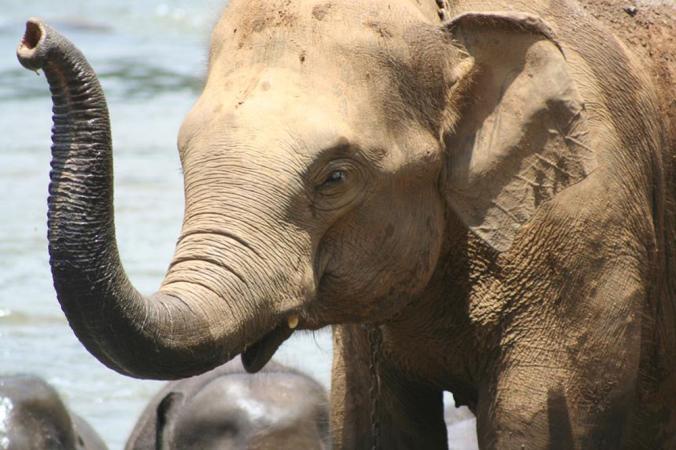
Animals have been smelling for hundreds of millions of years, but the evolution of that sense is difficult to trace. You can’t ask an elephant to describe the fragrance of an acacia tree, for example, nor can you ask a lion if it gets the same feeling from a whiff of the same plant.

So scientists have to gather indirect clues to how different species use their noses. One way is to run simple tests on animals, seeing if they show an ability to tell different odors apart. Elephants, for example, can tell the difference between the smells of as many as 30 different members of their extended family.

Continue reading “The Tree of Smells”

The New York Times, August 7, 2014

Link

Over the weekend, an entire city was brought to its knees by pond scum.

Toledo, Ohio, gets its drinking water from the western end of Lake Erie. A bloom of bacteria formed there last week, producing a dangerous toxin called microcystin. City officials warned half a million residents against drinking municipal water. At high doses, the toxin can cause liver failure.

The microbes that terrorized Toledo, known as cyanobacteria, are actually a worldwide menace.

Continue reading “Cyanobacteria Are Far From Just Toledo’s Problem”

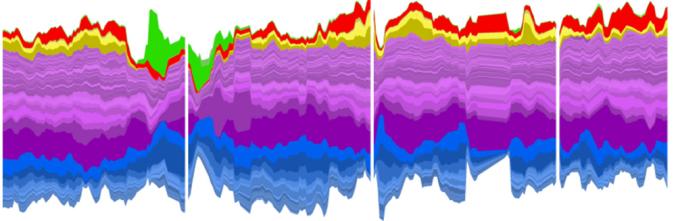
THE MICROBES IN ONE GRAD STUDENT’S GUT OVER A YEAR. FROM DAVID ET AL 2014

Some of my friends are sporting wristbands these days that keep track of their bodies. Little computers nestled in these device inside record the steps they take each day, the beats of their heart, the length of their slumbers. At the end of each day, they can sit down at a computer and look at their data arrayed across a screen like a seismogram of flesh.

I got one of these devices as a gift recently. But as much as I enjoy wasting time with technology, I just didn’t care enough to put it on my wrist. I already know that I should run more, walk more, stand more, and avoid sitting in front of monitors more. I don’t need granular data to remind me of that.

But as I read the journal Genome Biologythe journal Genome Biology today, I decided that someday I might surrender to the Quantified Self movement. I’ll just have to wait till I can track my trillions of microbes from one day to the next.

Continue reading “The Quantified Microbiome Self”